Shape Communities. Grow Your Career.
We know that building great communities starts with teams made up of great people. If you’re exploring ways to collaborate and make an impact, join us.
Explore Career Opportunities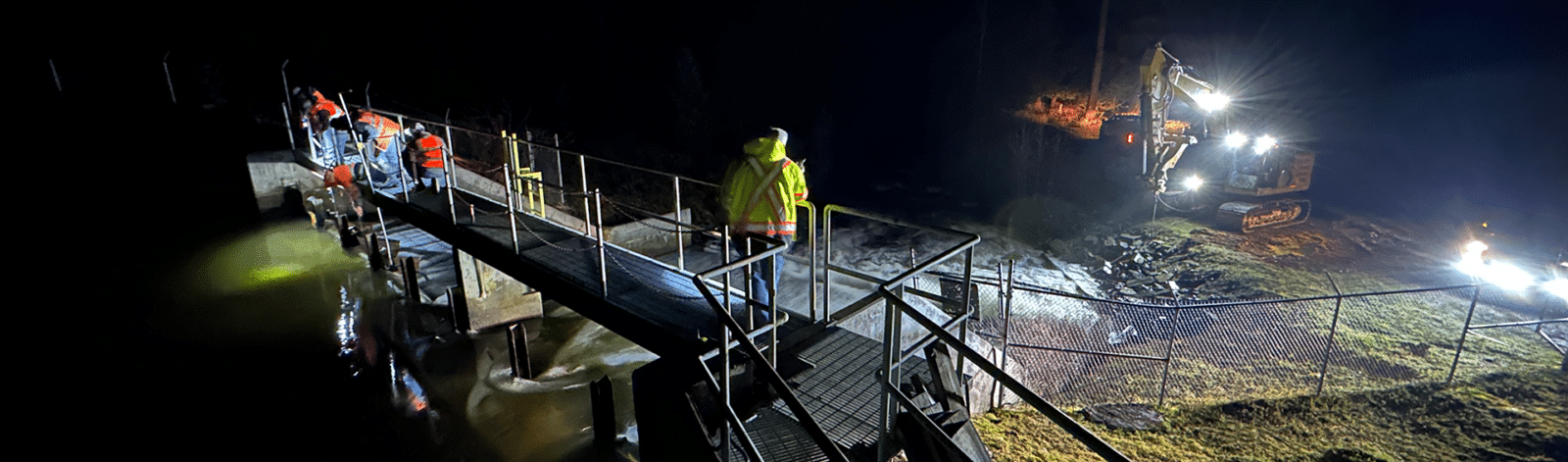
When a mid-December rain-on-snow event drove high runoff through the mountains south of Libby, Montana, roads and bridges were damaged across the area. At the Lower Flower Creek Diversion Dam, the event also raised urgent concerns about overtopping, erosion, and a potential embankment failure. The instream diversion dam supports the City of Libby’s municipal water system, making the condition of the structure a concern for both dam safety and water supply.
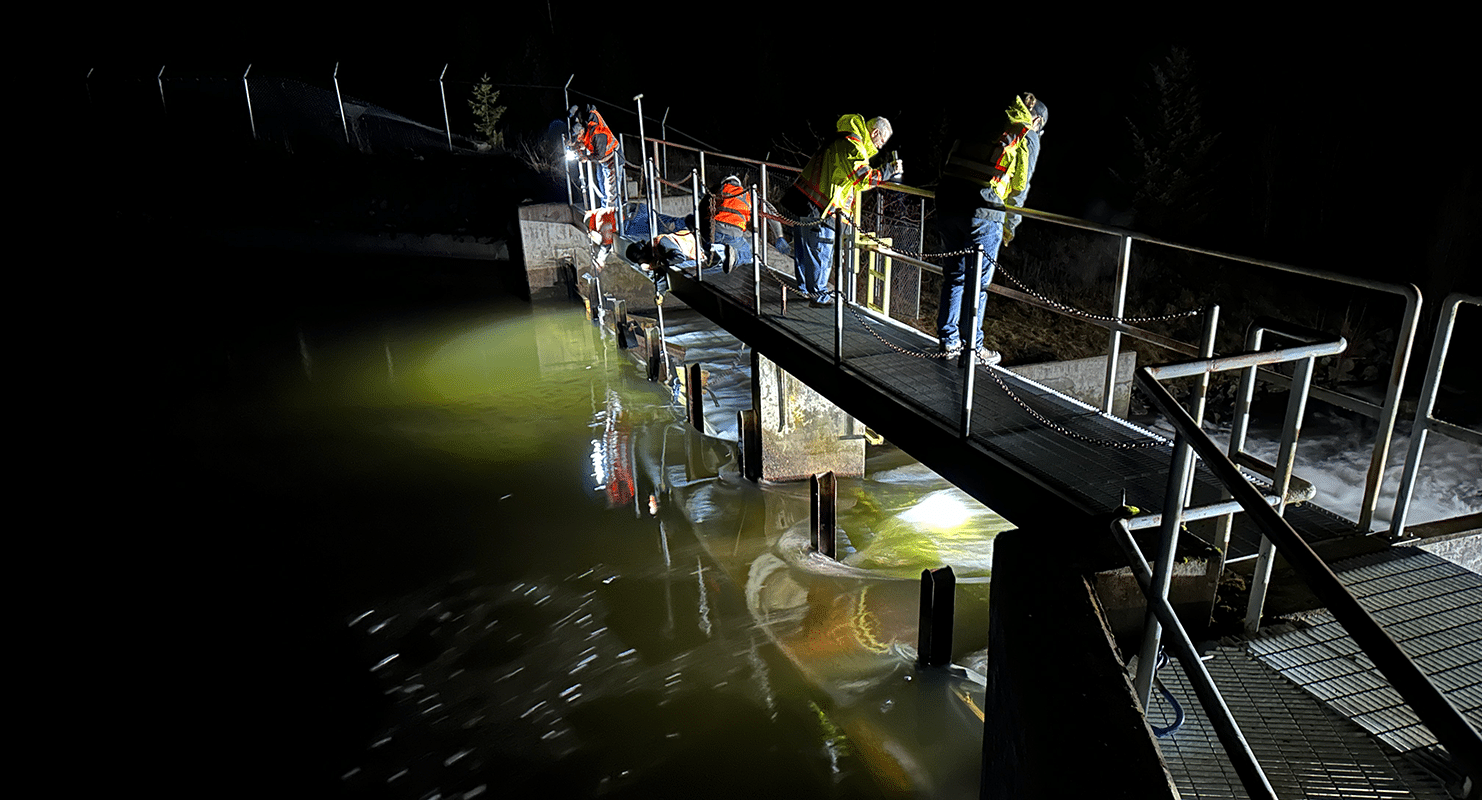
Montana DNRC Dam Safety requested Morrison-Maierle’s assistance on Saturday, December 13, 2025. Engineers mobilized that afternoon and arrived in Libby before daylight the next morning. After participating in an emergency operations briefing and reviewing available documentation, the team traveled to the dam to evaluate the structure and identify immediate risk-reduction measures.
Morrison-Maierle’s dam-safety and civil engineers ultimately worked more than 18 hours in the area on Sunday alone, helping DNRC, the City of Libby, emergency-management personnel, and local contractors respond to rapidly changing conditions.
Mobilized dam-safety and civil engineering personnel within hours of DNRC’s request.
Inspected the spillway, parapet wall, embankment, seepage areas, and downstream erosion features.
Identified field evidence consistent with a progressing internal erosion mechanism.
Recommended reservoir drawdown by removing spillway flashboards.
Directed contractor removal of the flashboards and construction of a sandbag ring dike.
Established daily monitoring procedures, measurement protocols, and response triggers.
Documented site conditions, mitigation actions, monitoring needs, and engineering considerations for remediation.
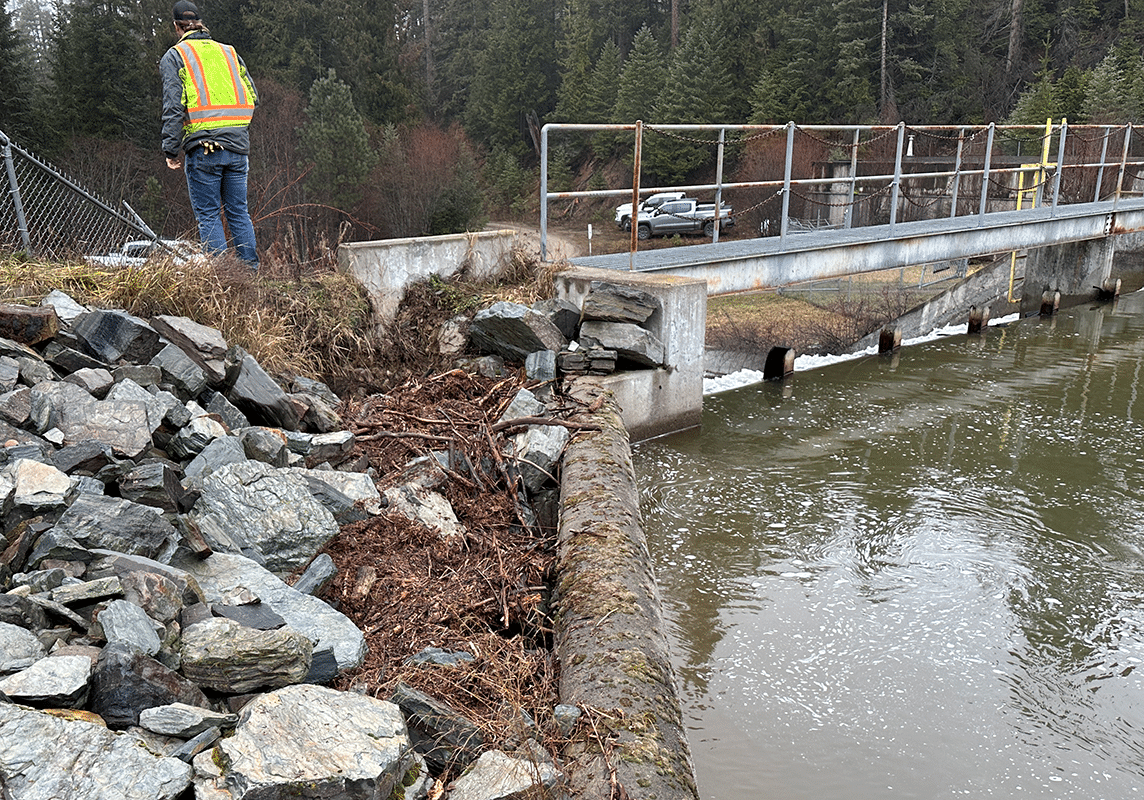
The Lower Flower Creek Diversion Dam is located on Flower Creek downstream from the larger Upper Flower Creek Dam. The diversion dam stores and diverts surface water, providing the hydraulic head necessary for Libby’s municipal water supply intake.
The water-retaining system includes an approximately 350-foot-long earth embankment, a concrete parapet wall, an auxiliary spillway, a primary concrete spillway with flashboards, a low-level outlet, and municipal intake facilities. Because these components function as an integrated system, damage to the embankment or spillway area could affect both dam safety and water-system reliability.
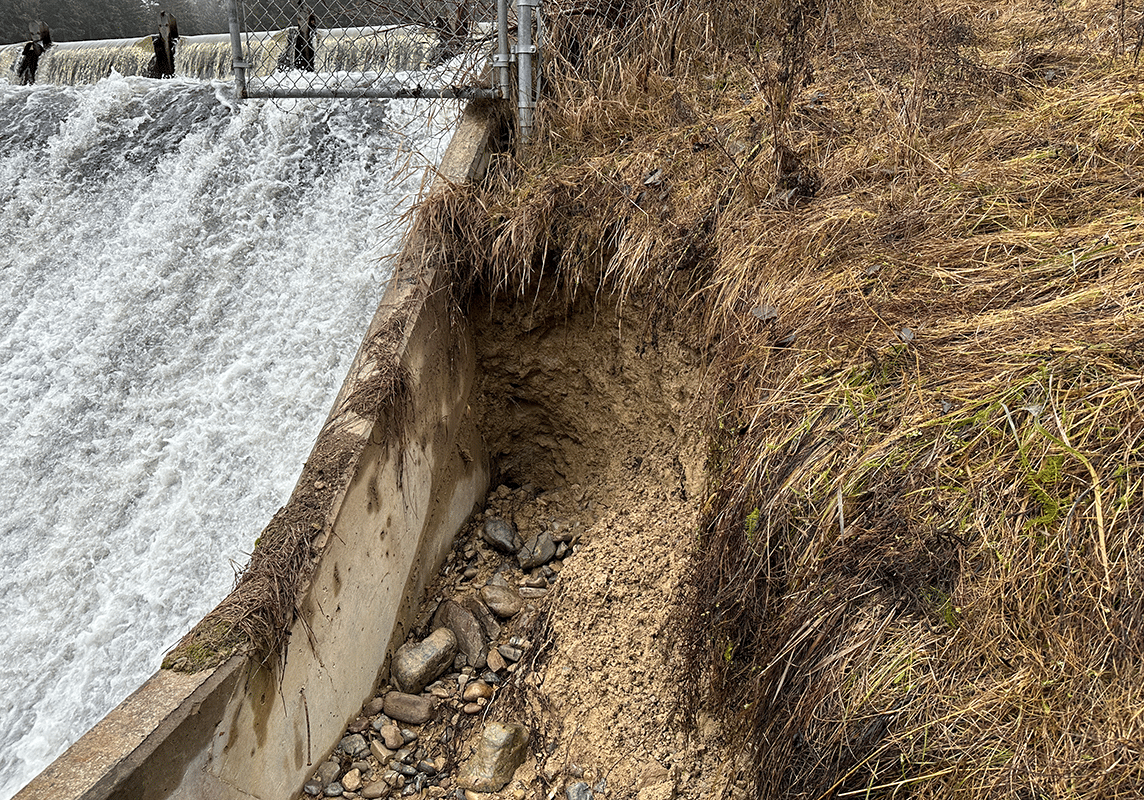
During the initial inspection, Morrison-Maierle identified conditions consistent with a progressing internal erosion failure mechanism near the left side of the spillway. Observations included debris above the parapet wall, deteriorated concrete, an approximately 10-foot sinkhole along the parapet wall, significant erosion outside the left spillway training wall, and a roughly four-foot vertical face of recently eroded embankment material.
Near the downstream toe, an active boil was discharging clear water through saturated soils. A boil can form when seepage follows a preferential path through or beneath an embankment and emerges under pressure. If that seepage begins transporting soil particles, the resulting internal erosion can progressively weaken the embankment.
Because the observed erosion and seepage could not be explained by surface overtopping alone, the team concluded that internal erosion was the most likely cause of the damage. Additional precipitation was forecast, and DNRC’s preliminary consequence review indicated that multiple residences could be affected if the dam failed. Immediate mitigation was warranted.
Morrison-Maierle worked with DNRC Dam Safety, City representatives, emergency-management personnel, and local contractors to reduce loading on the compromised embankment. The team recommended removing spillway flashboards to lower the reservoir to the spillway crest.
Operating the low-level outlet was not considered a reliable alternative. The outlet appeared to have been nonfunctional for many years, and attempting to use it could have introduced additional operational risk.
Noble Excavation mobilized Sunday evening and removed the flashboards using field-adapted methods. By 8:20 p.m., the reservoir had been lowered to the spillway crest. The lower reservoir level reduced hydraulic head on the embankment and decreased seepage near the damaged area.
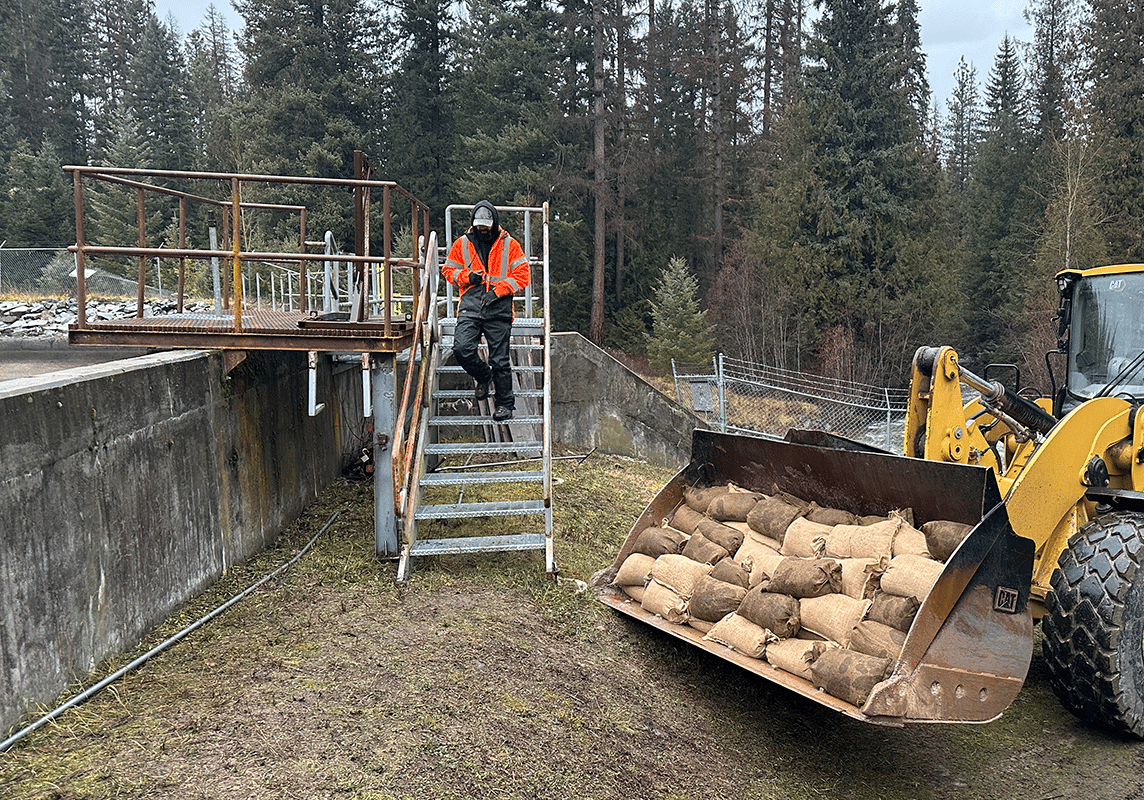
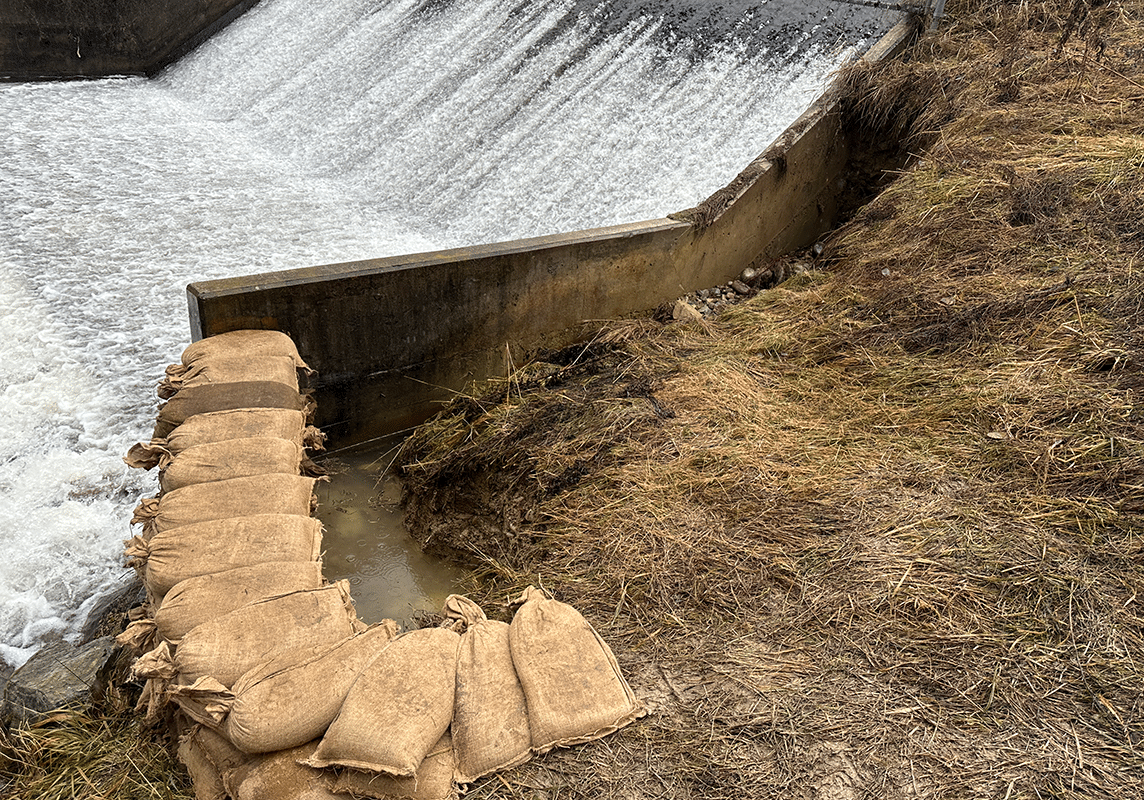
Morrison-Maierle returned Monday to direct construction of a sandbag ring dike around the active boil. The ring dike created a controlled pool over the seepage exit, increasing tailwater pressure and reducing the hydraulic gradient through the localized seepage path.
The measure did not repair the underlying embankment damage, but it helped reduce the potential for continued soil transport while longer-term actions could be evaluated. The team also established daily observation and measurement procedures for the reservoir, ring dike, seepage conditions, and spillway.
Monitoring protocols included clearly defined triggers for notifying dam-safety personnel or emergency officials if conditions worsened. These triggers addressed changes such as increased seepage flow or turbidity, rising reservoir levels, additional erosion or sloughing, spillway blockage, and signs of imminent failure.
Following the emergency response, Morrison-Maierle documented the dam’s condition, the completed mitigation measures, ongoing monitoring needs, and engineering considerations for future work.
The team recommended that remedial work be designed and overseen by a licensed engineer with dam-safety experience. Geotechnical input would also be needed to guide excavation limits, replacement materials, construction methods, and construction quality assurance.
The emergency highlighted the close relationship between the diversion dam and Libby’s municipal water system. The structure must safely retain and release water while also providing the operating head needed for the municipal intake.
Long-term resilience will depend on coordinated dam-safety and water-system planning, continued regulatory engagement, and further evaluation of the structure’s operational needs. The response also demonstrated the value of rapid field assessment, clear communication, and practical engineering decisions when communities face evolving infrastructure risks.
Learn more about our dams and hydropower services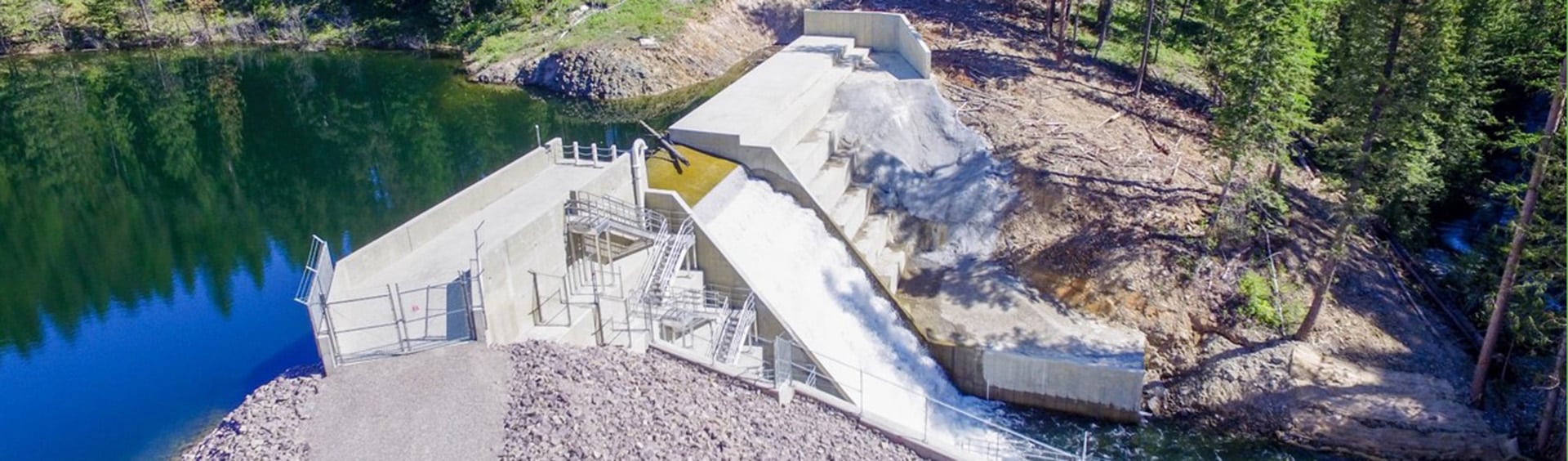
Morrison-Maierle’s new Flower Creek Dam project allows the City of Libby to control the level of the reservoir that helps protect downstream fish habitat with a simplified operation.
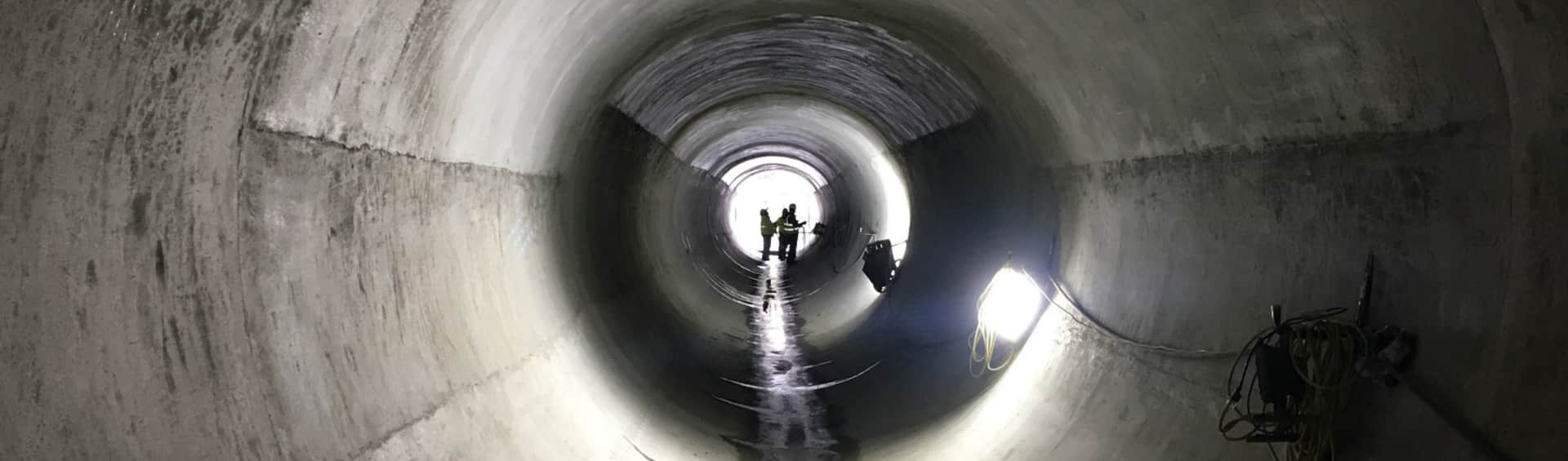
NorthWestern Energy hired Morrison-Maierle to conduct a feasibility study and rehabilitation design for the Hebgen Dam Outlet Pipe.
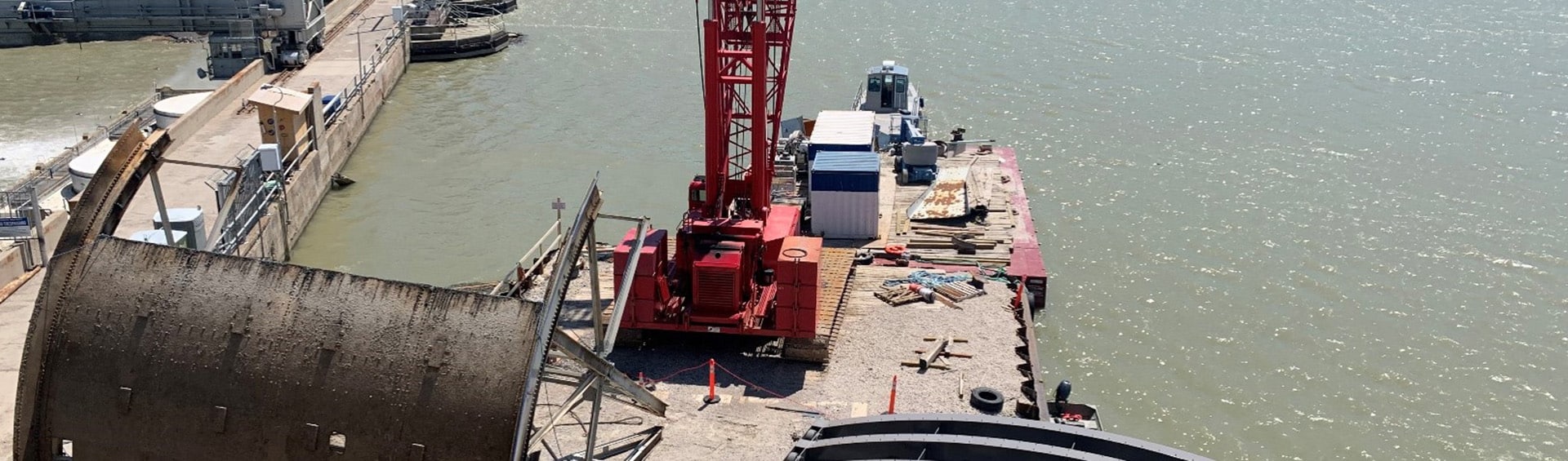
Morrison-Maierle provided procurement specifications for the new gates, hoists, heated guide system, construction sequencing for the spillway and pier modifications, and hoist house enclosure design.

We know that building great communities starts with teams made up of great people. If you’re exploring ways to collaborate and make an impact, join us.
Explore Career Opportunities