Shape Communities. Grow Your Career.
We know that building great communities starts with teams made up of great people. If you’re exploring ways to collaborate and make an impact, join us.
Explore Career Opportunities
ACEC-Montana awarded Morrison-Maierle three Engineering Excellence Awards this year.
The Engineering Excellence Awards are an annual celebration of engineering excellence, honoring projects throughout Montana that demonstrate innovation, creative problem-solving, and engineering’s unique ability to improve the world.
Arian Bloomfield, Morrison-Maierle President and CEO, said of our award-winning projects, “These awards are not about Morrison-Maierle alone. They reflect the strength of the partnerships we build with our clients and the dedication of our employee-owners who bring these projects to life. Together, they demonstrate what can be accomplished when expertise, trust, and a commitment to improving our communities come together.”
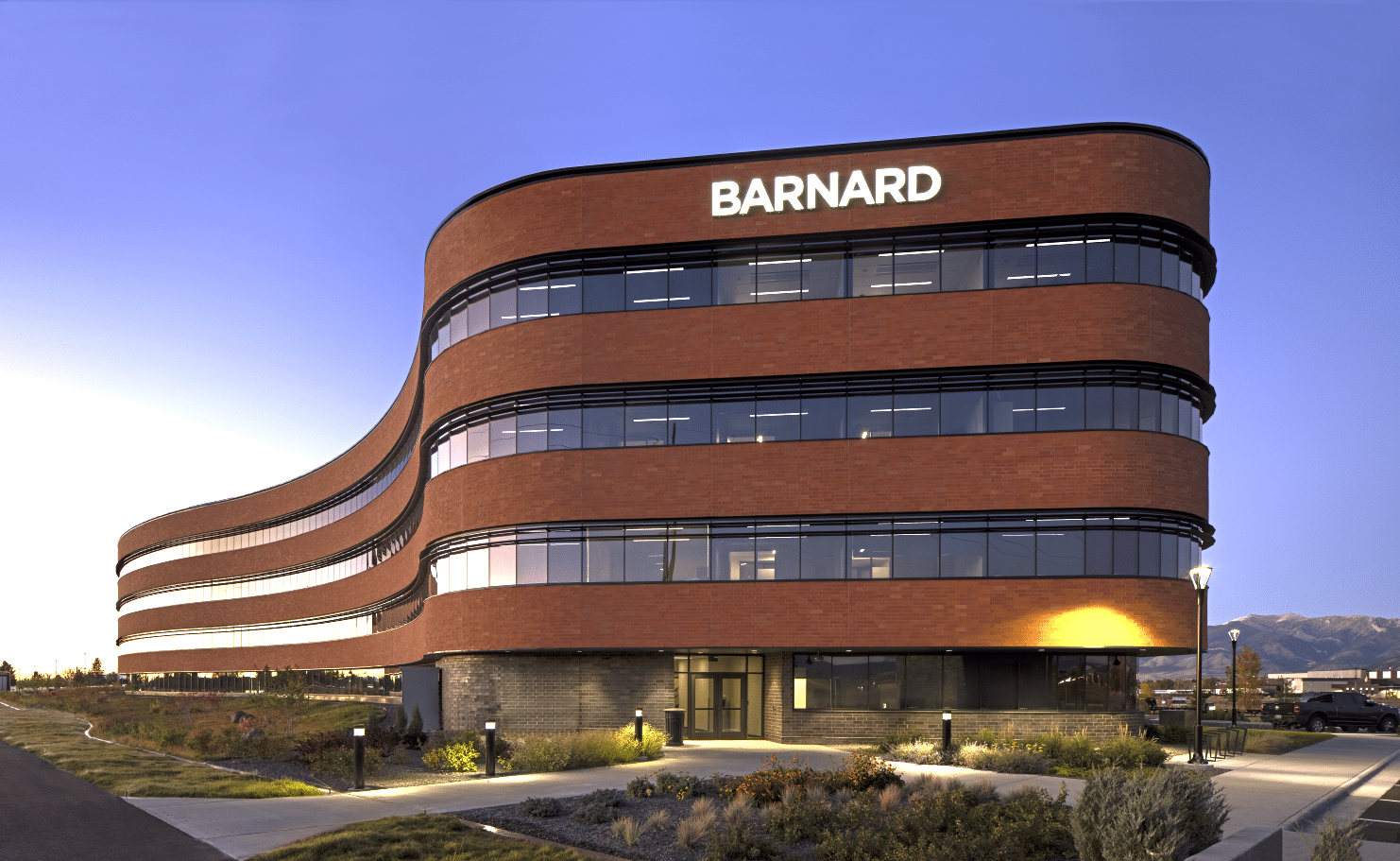
The Barnard Corporate Headquarters building project won the Structural Systems Category Honor Award.
The client’s design and end-use goals shaped nearly every structural decision on the project. Barnard’s owner wanted a building that would break from the region’s typical commercial architecture, while setting a firm requirement that every one of the company’s 300+ offices have an exterior wall and a view. Achieving this perimeter office goal required maximizing the building’s exterior exposure, and with the site’s four-story zoning height limit, that need translated directly into a long, sinuous, 400- foot structure rather than a compact one.
That single design decision—equal access to views—cascaded through the entire structural design. The height limit, combined with the building’s length, forced an unusually tight floor-to-floor dimension, which Morrison-Maierle’s structural team addressed by implementing the side-plate prequalified frame system, allowing smaller beam sizes than a conventional connection would permit. The building’s double-curved, S-shaped geometry also required a polar-grid structural layout rather than a standard rectangular grid, along with high seismic and snow-load demands typical of the Bozeman area. Rather than relying on conventional equivalent lateral force procedures, Morrison-Maierle’s structural team applied advanced dynamic analysis in 3D modeling software to optimize the building’s lateral system and avoid oversized structural elements. Combined with the early, atypical involvement of the steel supplier, this approach helped the project come in on budget and on schedule despite its geometric and structural complexity
The structural project team included Nate Menuez and Tanner Evenson.
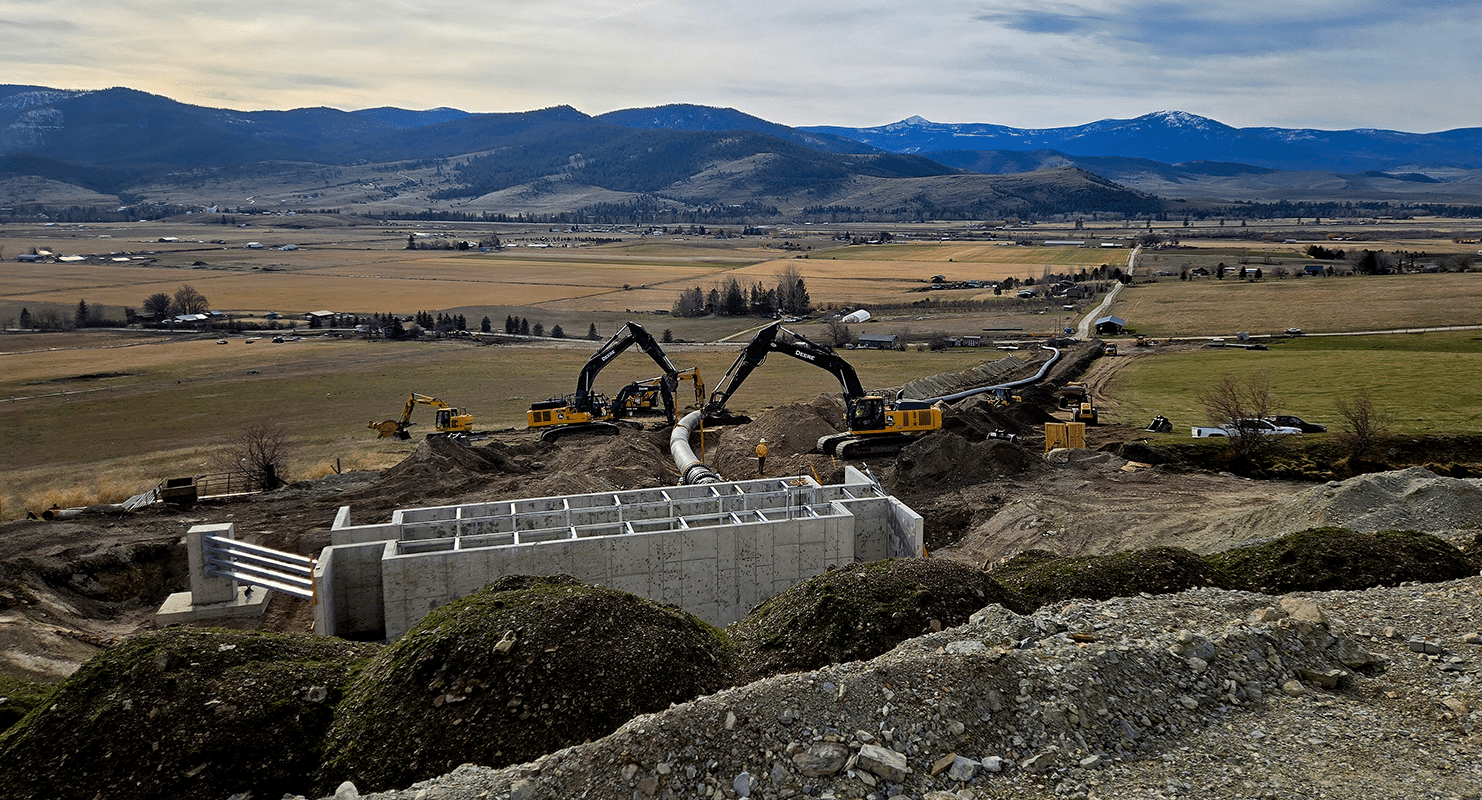
The Jocko Area Canal Conversion, Phases 1-4, won the Water Resources Honor Award.
On the Flathead Indian Reservation, the $22M Jocko Area Canal Conversion, Phases 1-4, replaces century-old open canals and private pipelines with a buried, gravity-fed, pressurized system. Led by the Confederated Salish and Kootenai Tribes, it is one of the first major projects delivered under the CSKT-Montana Water Rights Compact. The old system serves more than 4,500 acres, but seepage, limited measurement, and poor flow control forced unnecessary diversions and held back the instream flow targets that protect the Jocko River and native bull trout, a species of deep cultural importance to the Tribes.
Morrison-Maierle’s design uses the valley’s natural elevation change to deliver pressurized water without new pumping. Phases 1-4 include 12.2 miles of pipeline, 161 structures, and 93 delivery connections, built with advanced modeling for long-term operations and with portions of the system kept running during construction. Many irrigators will be able to cut or eliminate pumping, saving thousands in energy costs. Funded through the $1.9 billion Compact settlement, the project delivers value well beyond its footprint and offers a replicable model for modernization efforts where water scarcity, aging infrastructure, energy costs, and environmental restoration intersect.
The project team included Mike Brandt, Mike Brennan, Sheila Cather, Jerry Chambers, Breanne Cline, BJ Cope, Marvin Courville, Molly Davidson, Mark Dose, Faith Doty, Molly Fehringer, Ken Fields, David French, Gunnar Getchell, David Hallsten, Cayden Jordan, Mike Kynett, Brian Literski, Madelyn McInnis, Craig Nowak, Nik Ortman, Christine Pearcy, Andrea Price, Elijah Quick, Garrett Quigley, David Sims, Reid Smith, Tyson St. John, and Bill Wiegand.
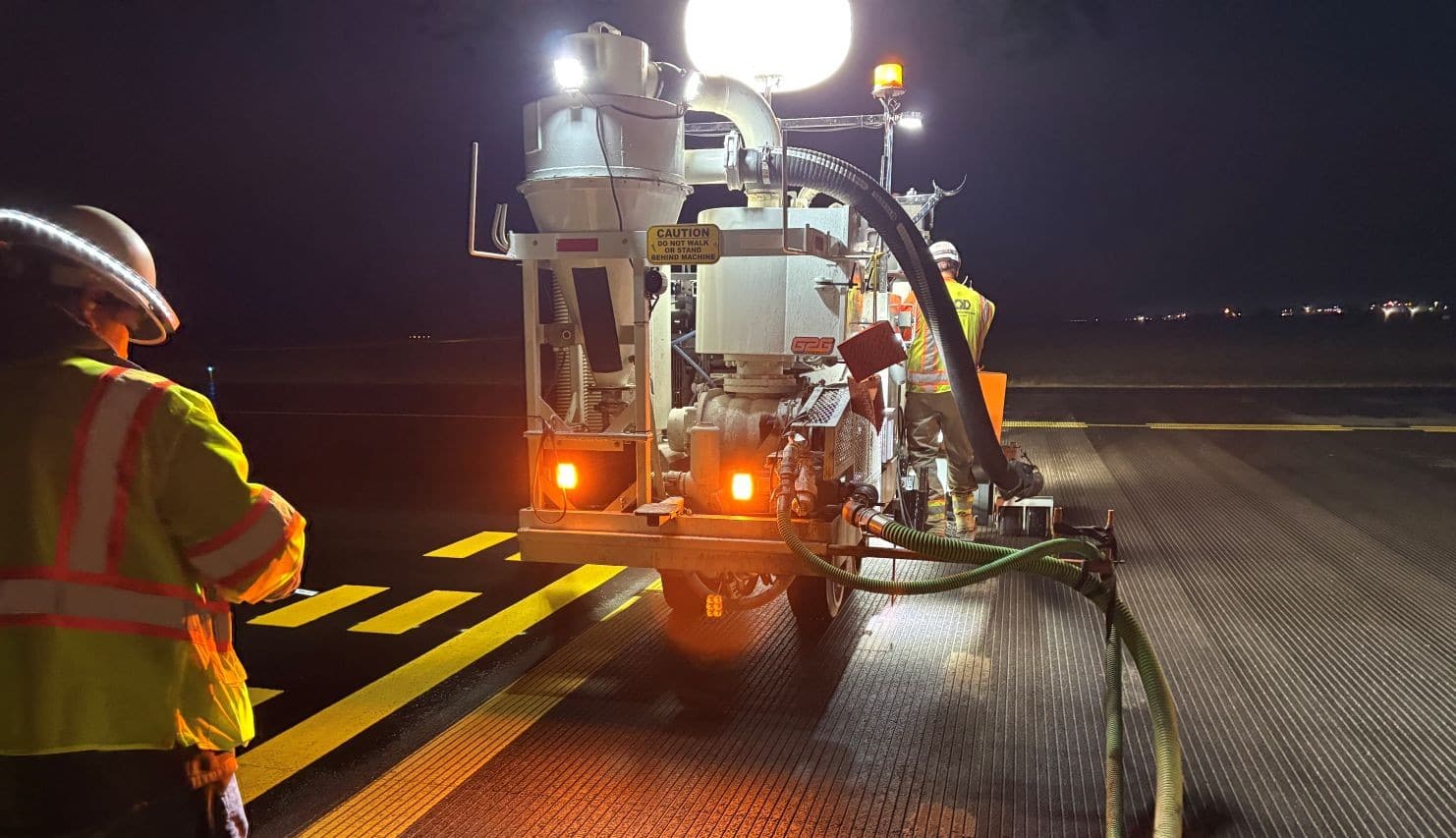
The Missoula Montana Airport Runway 12-30 Rehabilitation project took home the Transportation Category Honor Award.
Located at Montana’s second-busiest airport, which serves more than 1,000,000 passengers a year, the $20.3 million Missoula Montana Airport Runway 12-30 Rehabilitation restored the primary runway after pavement last rehabilitated in 2007 slipped to a “fair” condition rating from joint cracking, rutting, and raveling. The team added a 3-inch asphalt overlay (more than 45,000 tons) with a paving fabric interlayer to slow reflective cracking, a material outside standard FAA specifications that required a formal Modification of Standards and FAA approval. The electrical overhaul brought the state’s first high-intensity LED runway lighting, along with new taxiway lighting, a relocated MALSR approach lighting system, a new emergency generator and constant current regulators, more than 55,000 linear feet of conductors, and a fully replaced weather information system and pavement sensors.
The challenge was doing all of it without long disruptions to a runway the region depends on. The team split the work into five carefully sequenced bidding schedules. Three nightly closures created a temporary displaced threshold, opening a 10-day window to relocate the MALSR system, and the sequence culminated in a 127-hour continuous closure for the core paving and electrical work. Despite the schedule pressure and the coordination of pavement, electrical, and FAA-owned navigational equipment, the project finished on schedule and under budget, delivering a safer, stronger, and more sustainable runway.
The project team included Scott Bell, Carter Bignell, Jace Bovington, Steve Brown, Thomas Denison, Cammy Dooley, Scott Eaton, Ed Elder, Molly Fehringer, Andy Galen, Tanner Heichel, Cayden Jordan, Jarad Koltiska, Mark Maierle, Sarah Michaelson, Kyle Muck, Roselyn Perrigo, Elijah Quick, Tyler Reed, Neilan Salerno, Shaun Shea, David Sims, Dan Sorenson, Patrick Stetson, Kristy Wilson, and John Wishman.
We are honored to see this work recognized. Congratulations to the clients and teams who made it happen.
View more projects
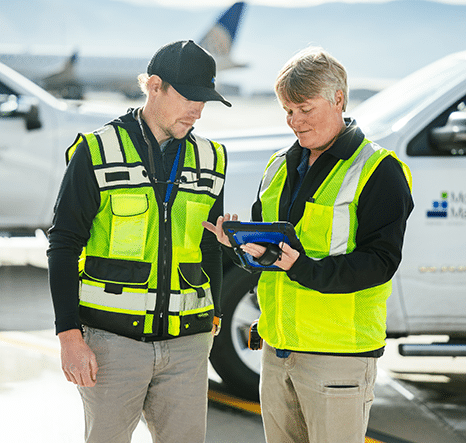
We know that building great communities starts with teams made up of great people. If you’re exploring ways to collaborate and make an impact, join us.
Explore Career Opportunities