Shape Communities. Grow Your Career.
We know that building great communities starts with teams made up of great people. If you’re exploring ways to collaborate and make an impact, join us.
Explore Career Opportunities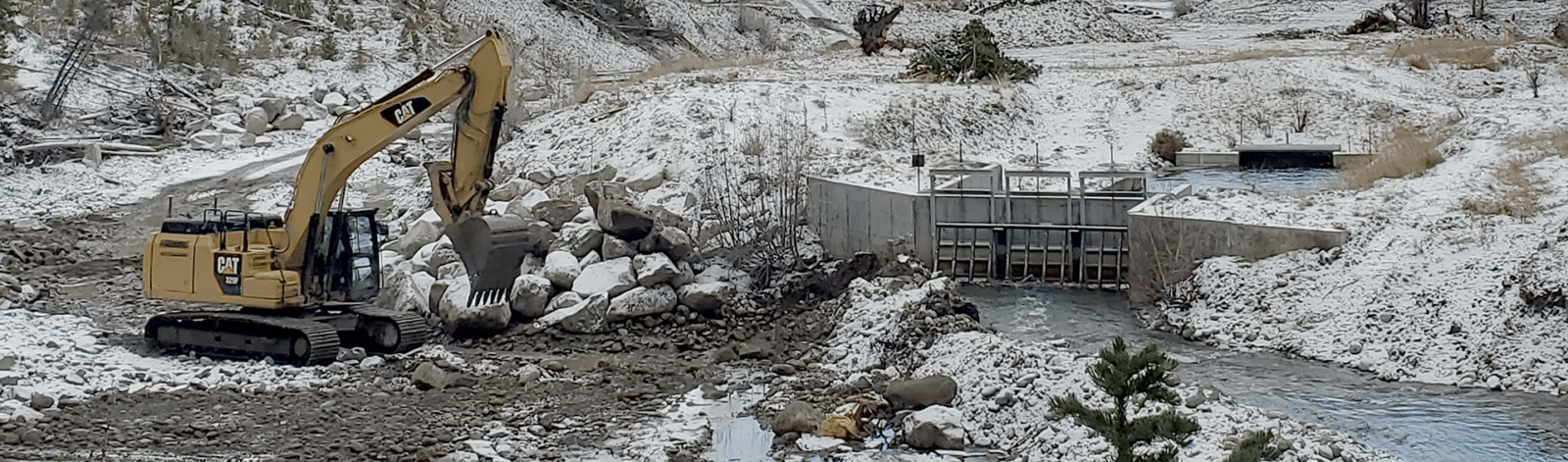
Located along the east margin of Grand Teton National Park on Bridger-Teton National Forest lands near Jackson Hole, Wyoming, the Spread Creek Fish Passage Project demonstrates how thoughtful engineering can restore aquatic connectivity while preserving reliable irrigation delivery. The project addressed a long-standing barrier in the Spread Creek watershed, where an obsolete, full-width concrete irrigation diversion dam had disconnected migratory Snake River fine-spotted cutthroat trout from more than 50 miles of upstream habitat for more than half a century. The original structure was approximately 120 feet long and 9 feet high, with a 4- to 6-foot head differential between the upstream and downstream sides. It provided irrigation water, but it also blocked fish passage, constrained natural sediment movement, and required increasingly intensive maintenance in a dynamic mountain stream system.
The Spread Creek Fish Passage Project ultimately delivered a win for fish, land managers, and irrigators. It reconnected more than 50 miles of important cutthroat trout habitat, modernized a working irrigation diversion, reduced fish entrainment, improved channel and bank stability, and supported more resilient water delivery. Video courtesy of Trout Unlimited.
The first phase of the project, completed in 2010, removed the deteriorating concrete dam and replaced it with a fish-passage-friendly rock-weir diversion and a new water-delivery system. Morrison-Maierle* team members provided project management, stakeholder outreach, surveying, hydraulic modeling, engineering, permitting, and construction oversight for Trout Unlimited and its partners. The new diversion was designed to maintain a maximum irrigation delivery rate of 60 cubic feet per second while allowing fish to move through the project reach year-round. The design also had to accommodate a highly mobile gravel-bed stream, with estimated in-stream flows ranging from approximately 30 cfs to 1,750 cfs and significant bedload transport during high-flow events.
In addition to removing the passage barrier, the first phase modernized the diversion and water delivery infrastructure. The project included a new headgate structure, water measurement devices, approximately 1,100 linear feet of pipeline ranging from 24 inches to 48 inches in diameter, and a pipeline segment that functions as an inverted siphon to deliver irrigation water beneath Spread Creek. The work also included approximately 320 linear feet of biologically based streambank stabilization. Together, these improvements reduced the need for repeated in-stream equipment work, protected riparian resources, and restored upstream and downstream fish movement through the former dam site.
Post-construction monitoring confirmed that the restored connection was working: migratory cutthroat trout were again moving between the Snake River and Spread Creek’s headwaters for the first time in more than 50 years. However, that success revealed the next engineering challenge. As native fish used the reconnected system for spawning, rearing, and seasonal migration, juvenile and adult fish—including Snake River cutthroat trout and bluehead suckers—were being entrained into the Spread Creek irrigation system as they moved downstream. For agencies and water users familiar with outdated diversion infrastructure, the issue was clear: passage at the diversion was not enough. The system also needed effective fish screening that could protect out-migrating fish without compromising irrigation service.
The project area also experienced continuing channel instability after dam removal. Large water years and high-flow events in 2011, 2017, and 2018 damaged the rock weir diversion and contributed to sedimentation, bank instability, channel scour, and operational challenges for irrigation delivery. These conditions are common at diversions in steep, sediment-rich systems: the infrastructure must reliably convey water, pass sediment, remain stable during large flow events, and avoid creating hydraulic conditions that delay or injure fish. For Spread Creek, the second phase needed to solve these interrelated problems rather than treat the fish screen as a stand-alone component.
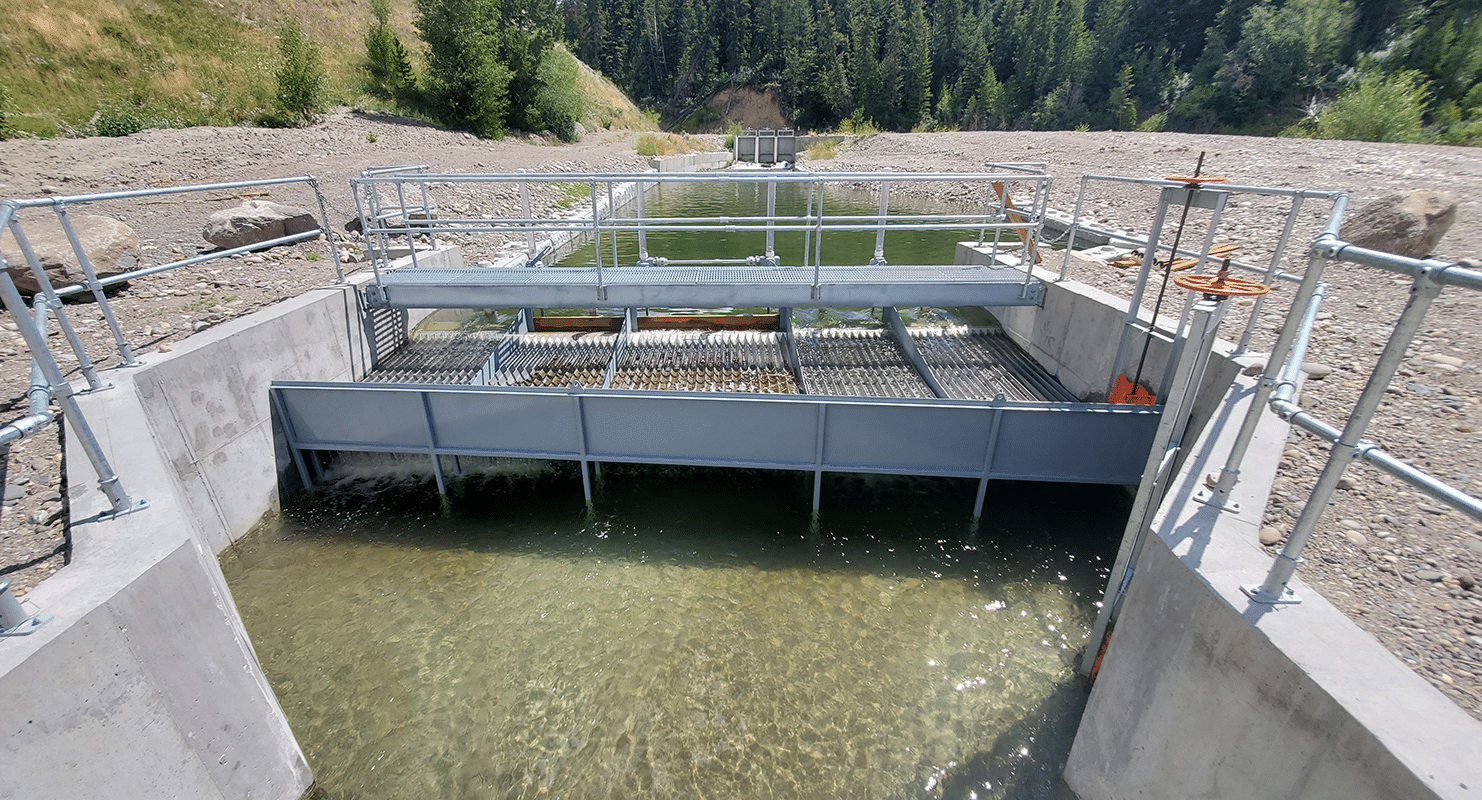
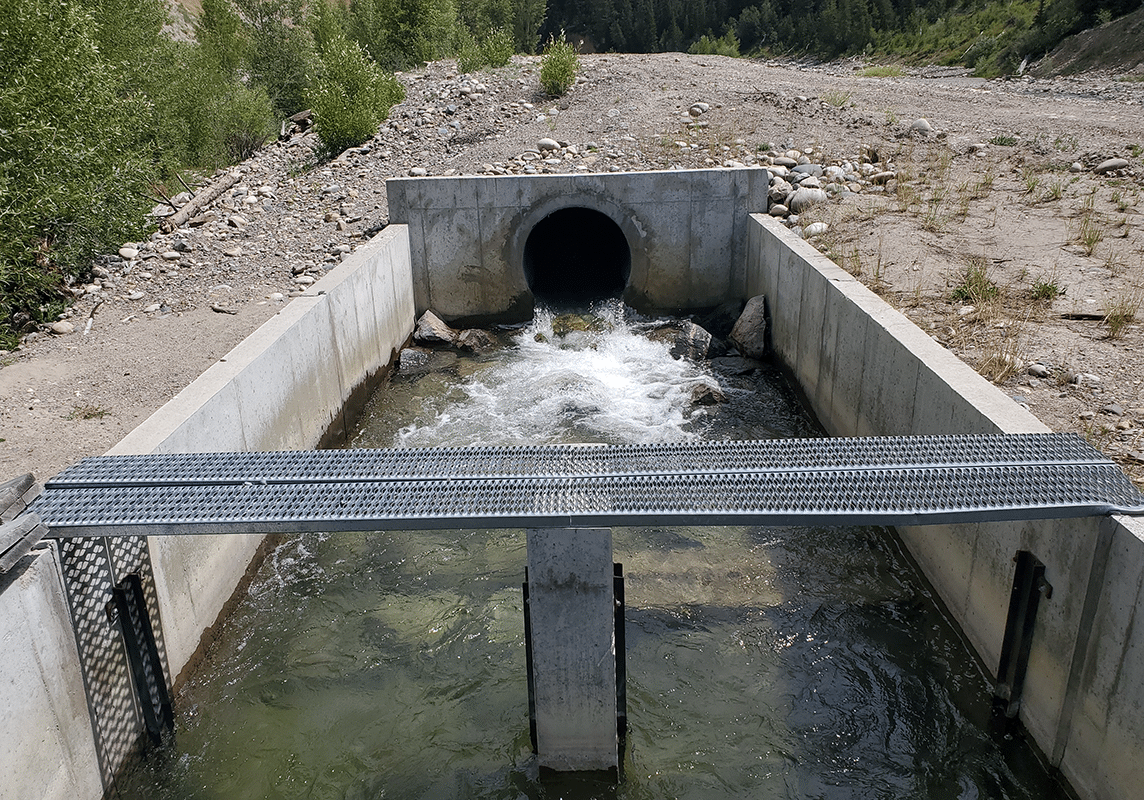
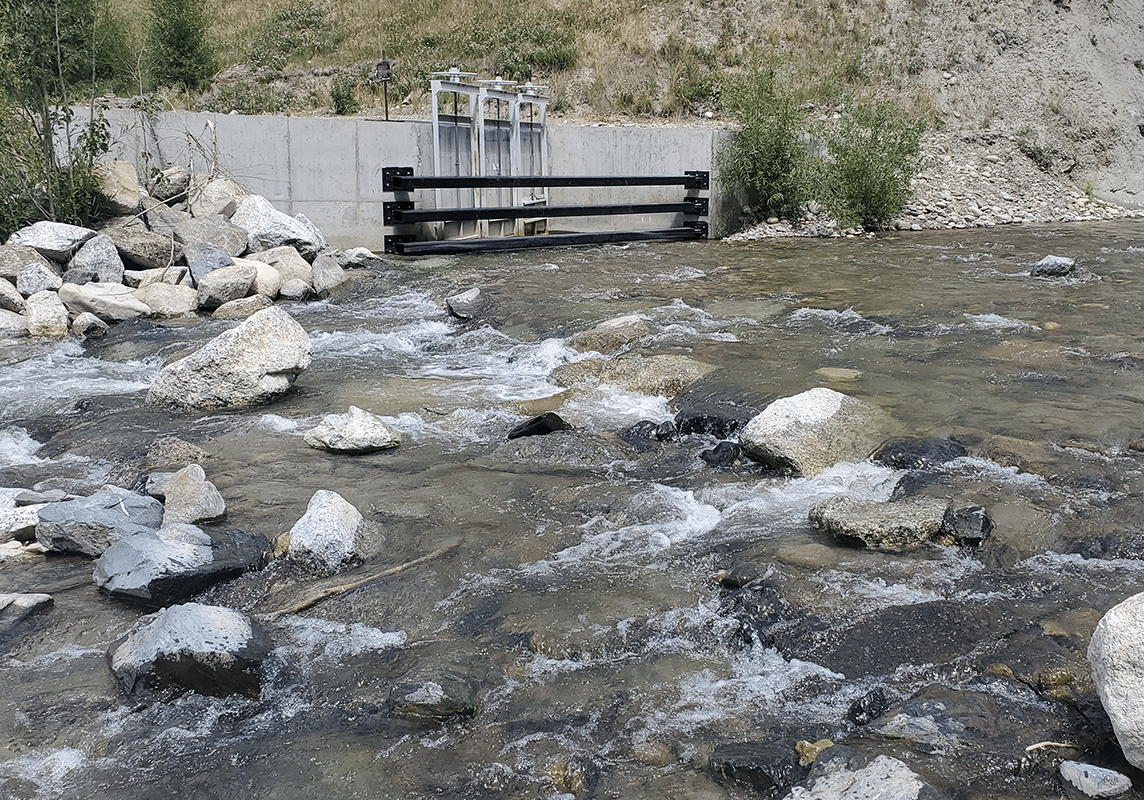
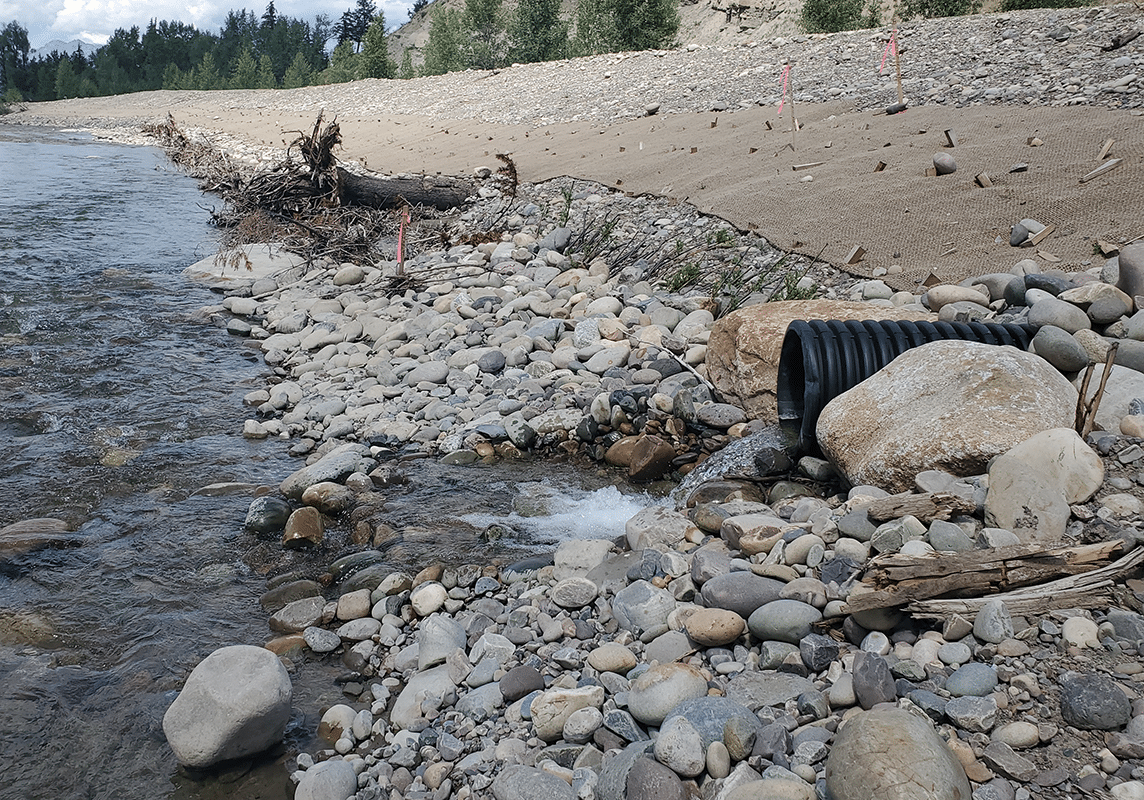
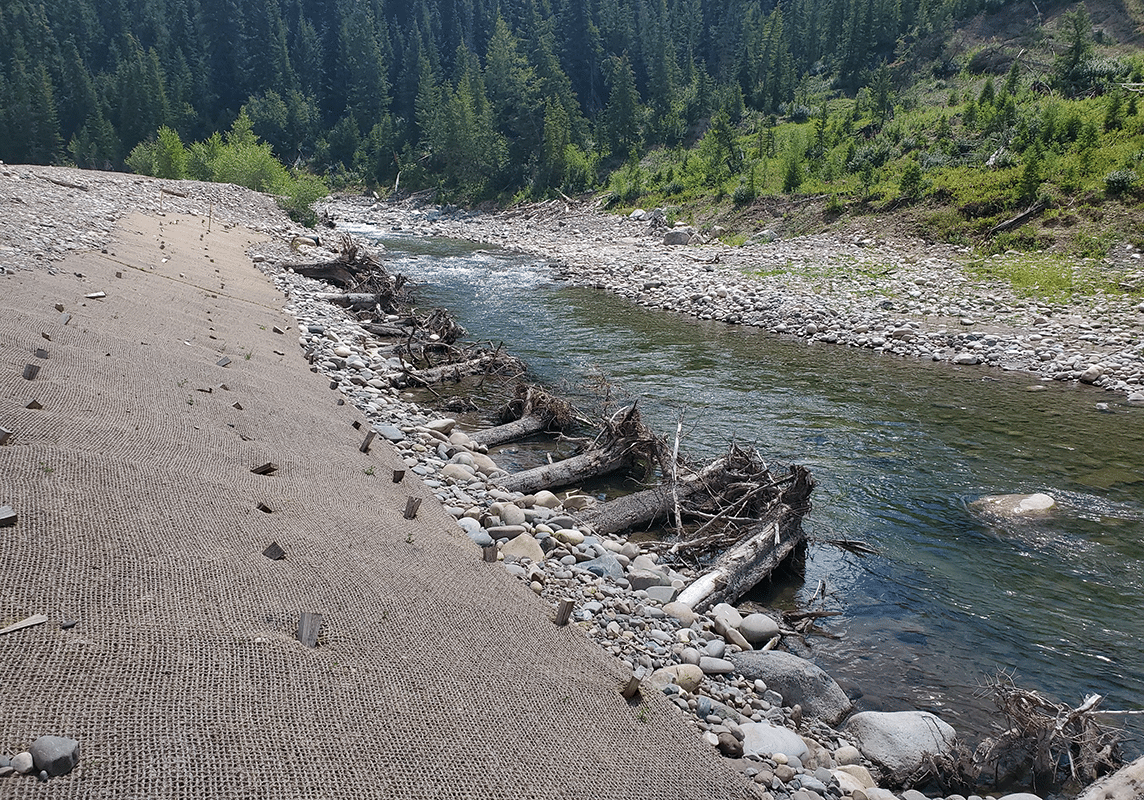
Phase 2, a $1.6 million collaborative effort completed in 2022, installed a fish screen on the Spread Creek irrigation system, rehabilitated the diversion for long-term stability and fish passage, and added in-stream and bank protection features to protect the irrigation infrastructure. The fish screen was designed to prevent fish from being carried through the water intake system while still delivering irrigation water to the ditches. Entrained fish are guided away from the irrigation delivery system and returned safely to Spread Creek through a bypass pipe. For resource agencies and irrigation districts evaluating fish screen upgrades, this integration is critical: an effective screen must do more than exclude fish. It must provide safe approach conditions, reliable bypass return, maintainable operations, and compatibility with the hydraulics and sediment regime of the diversion.
Morrison-Maierle’s engineering approach focused on system performance. In 2018, the team provided design services to further stabilize the diversion structure, reduce in-stream maintenance requirements, and improve sediment management. The design replaced the earlier rock weirs with a 250-foot-long rock riffle that better matched the channel’s natural grade and hydraulic behavior. The riffle approach provided a more stable, fish-passable transition through the diversion reach while improving the system’s ability to pass bedload during high-flow events. Additional bank stabilization employed engineered large-wood structures and toe rock to protect banks and irrigation infrastructure while maintaining habitat complexity and natural channel function.
The Spread Creek Fish Passage Project ultimately delivered a win for fish, land managers, and irrigators. It reconnected more than 50 miles of important cutthroat trout habitat, modernized a working irrigation diversion, reduced fish entrainment, improved channel and bank stability, and supported more resilient water delivery. For communities and agencies managing aging dams, diversions, and unscreened irrigation intakes, the project shows how effective engineering can convert an antiquated barrier into a functional, fish-friendly water management system.
* This project was completed by QRS Consulting prior to its 2026 acquisition by Morrison-Maierle.
Learn More About Our Fisheries Projects


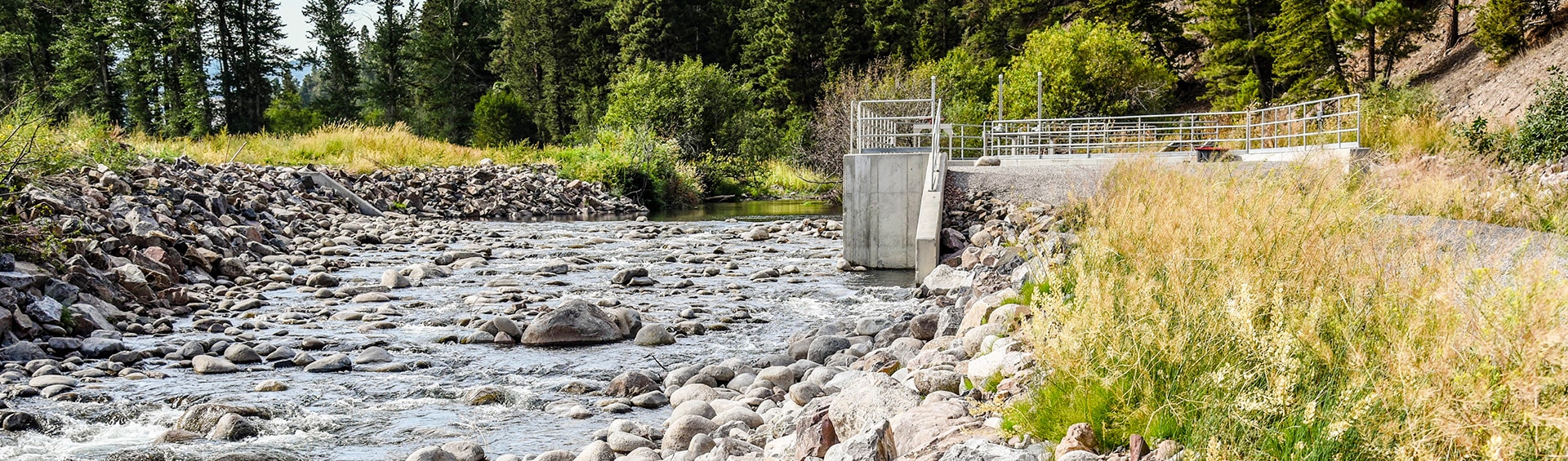
Allendale Canal and Fish Screen is part of the Flint Creek Water Project, owned by the Montana Department of Resources and Conservation (DNRC) and operated by the Flint Creek Water Users Association.
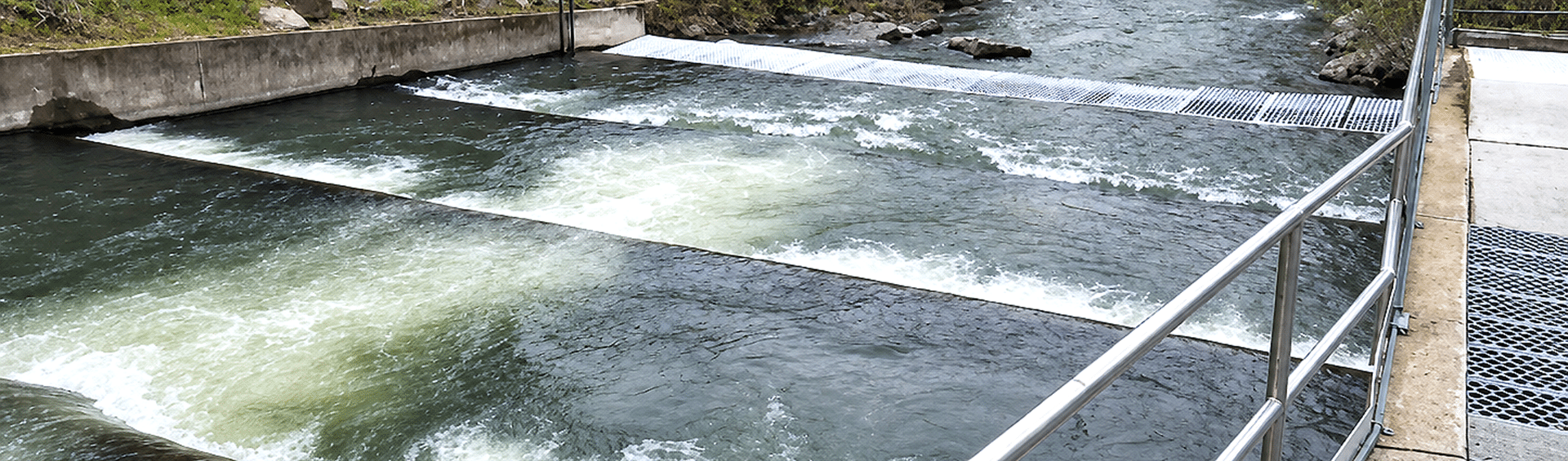
Catherine Creek Fish Passage project supports the Confederated Tribes of the Umatilla Indian Reservation’s fish trap operations.
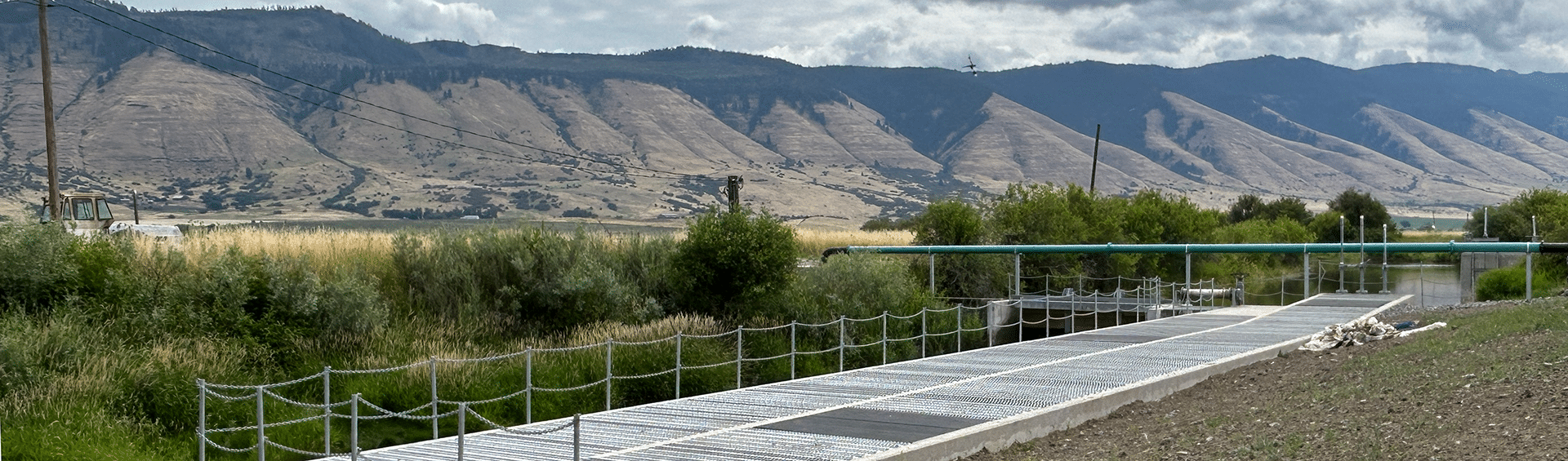
Located near La Grande, Oregon, the Elmer Dam Fish Passage project helps reconnect fish habitat in upper Catherine Creek while supporting the irrigation needs of a working agricultural property.

We know that building great communities starts with teams made up of great people. If you’re exploring ways to collaborate and make an impact, join us.
Explore Career Opportunities