Shape Communities. Grow Your Career.
We know that building great communities starts with teams made up of great people. If you’re exploring ways to collaborate and make an impact, join us.
Explore Career Opportunities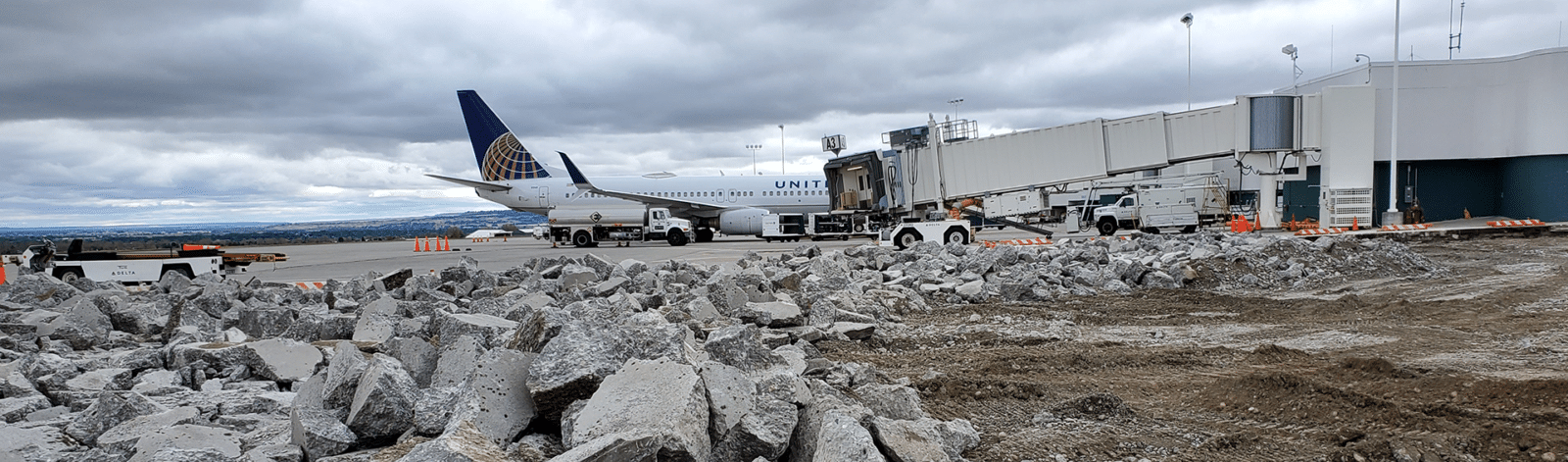
For airports with large areas of concrete pavement—commercial aprons, cargo ramps, aircraft parking positions, terminal aprons, hardstands, and other heavy-duty concrete paving—small surface changes can be early indicators of a much larger pavement problem, such as alkali-silica reaction (ASR). What begins as cracking, white residue, or slight heaving may point to ASR, a chemical reaction that can slowly damage concrete from within and eventually create operational and safety concerns on active airfields.
ASR is especially important for airport owners because concrete apron or ramp pavement is not just another paved surface. It supports aircraft loading, passenger movement, fueling, maintenance, cargo operations, ground service equipment, and safe aircraft circulation. Once deterioration accelerates, airports may face foreign object debris (FOD), reduced apron capacity, costly emergency repairs, or disruptions to airline and cargo operations.
At Billings-Logan International Airport, Morrison-Maierle’s airport engineering team encountered ASR while working on the airport’s terminal expansion and commercial apron improvements. The project became an important case study for identifying ASR, planning around active airport operations, testing mitigation strategies, and replacing impacted concrete pavement while keeping the airport functioning.
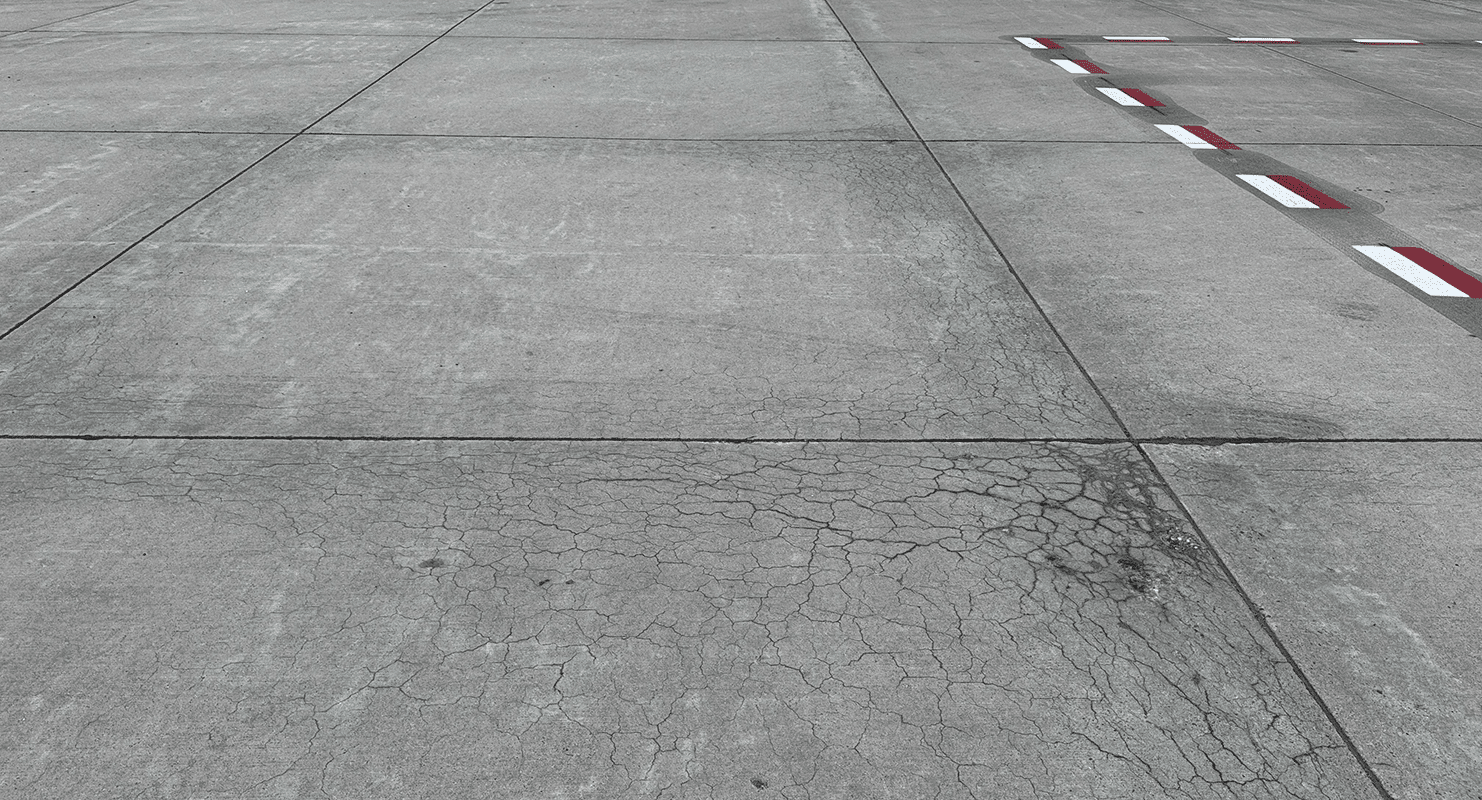
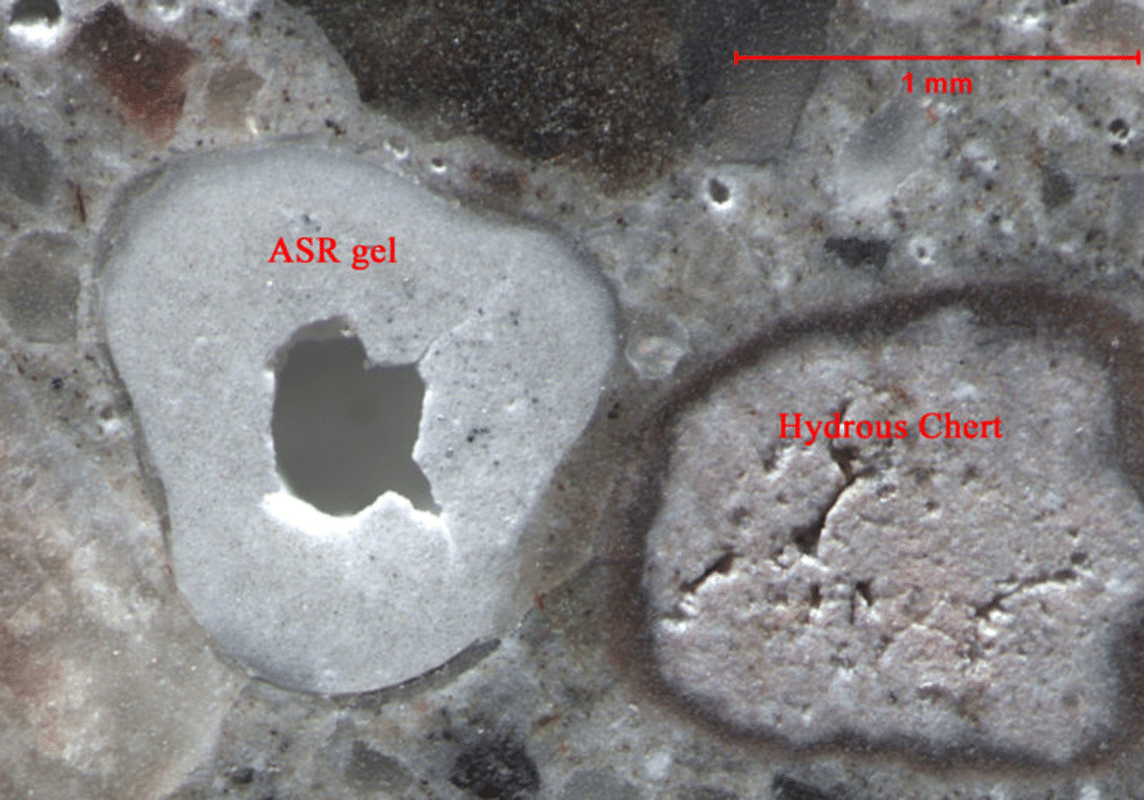
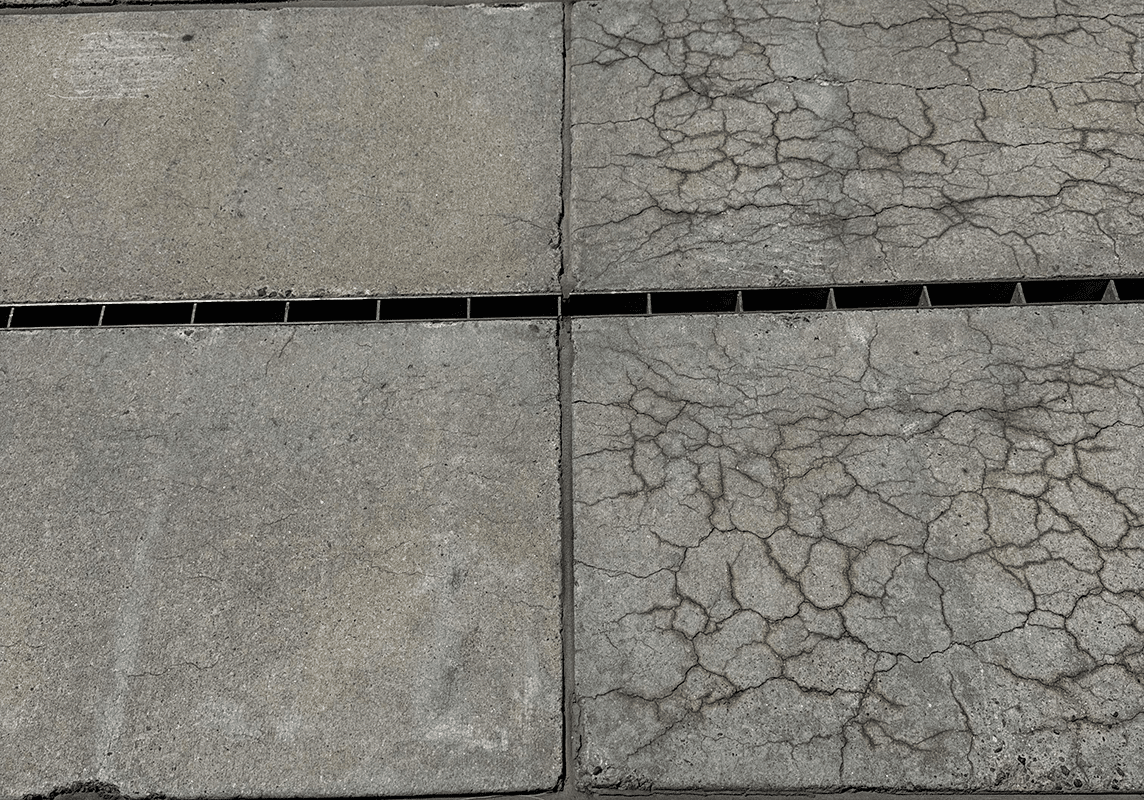
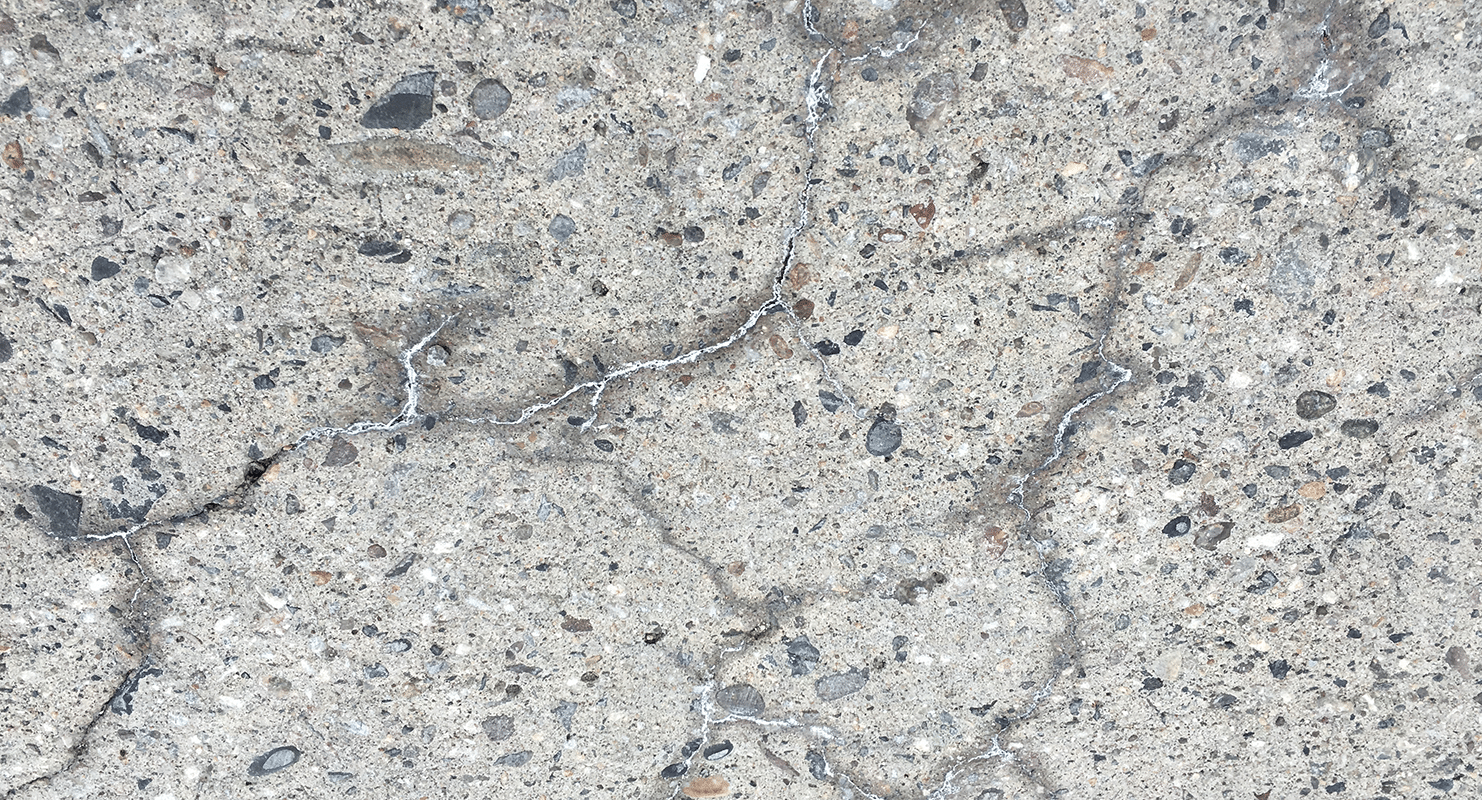
Is spalling or cracking starting to show up on your concrete pavements? If a level or straightedge is placed across the cracked area, does the surface appear to heave? Is there white gel or residue within the cracks? These symptoms can indicate that the concrete pavement is showing signs of alkali-silica reaction (ASR).
ASR is a chemical reaction in concrete that occurs when reactive silica in some aggregates reacts with alkalis in cement in the presence of moisture. The reaction produces a gel that absorbs water, expands, and exerts pressure on the surrounding concrete. Over time—with rain, humidity, ponding water, and repeated exposure to moisture—internal pressure can cause cracking, spalling, pop-outs, and surface debris.
On an airfield, that debris is more than a maintenance issue. It can become an FOD hazard around aircraft and during ground operations. For airports with commercial aprons, cargo ramps, and other large concrete paving areas, early recognition is critical because ASR is progressive. Once the surface begins to pop out and unravel, deterioration can accelerate.
ASR requires moisture, which makes drainage, climate, joint condition, surface cracking, and ponding important factors. In Billings, spring and summer thunderstorms can leave water on concrete surfaces, in joints, and around slotted drains. When temperatures rise quickly the next day, moisture may still be present in cracks and joints. That moisture can contribute to the reaction and allow ASR gel to continue expanding within the concrete.
For airport aprons and ramps, this means ASR should not be viewed only as a materials issue. It is also connected to water management, pavement condition, joint performance, maintenance timing, and the airport’s long-term capital improvement program. Airports that see heaving, white gel, spalling, cracking, or pop-outs should document the conditions, compare them with previous pavement inspections, and seek engineering input before the surface begins producing debris.
When an airport replaces ASR-impacted concrete pavement, the new concrete mix must be designed to reduce the likelihood of the same problem recurring. At Billings-Logan International Airport, the project team tested a concrete mixture using fly ash and lithium to mitigate ASR. The goal was to produce a new 16-inch-thick concrete slab that would provide a much longer service life for the commercial apron.
The addition of fly ash and lithium can help mitigate ASR, but each material brings practical challenges. Fly ash sources have become harder to locate and less consistent. Fly ash can also act as a retarding agent, slowing curing (especially in cooler weather), when concrete is already slower to cure. Lithium can be expensive, difficult to procure, and limited by a short shelf life. These factors can affect cost, schedule, testing, storage, and construction sequencing.
For airport projects, ASR-related testing can assess the potential alkali-silica reactivity of proposed cementitious materials, admixtures, and aggregates. The Billings project required laboratory testing of the concrete mix to verify that the fly ash and lithium approach would mitigate ASR. Testing can take 30 days or more, and if the mix fails, the design process may take longer. For that reason, getting mix design information from the contractor early is essential.
Replacing an ASR-impacted concrete apron or ramp is rarely as simple as removing and replacing pavement. Airports must maintain aircraft access, passenger service, cargo operations, emergency access, airline coordination, and safe aircraft movement. At Billings, the apron work occurred alongside an aggressive terminal expansion project, and the airport needed to keep six commercial aircraft locations operating at full capacity.
Morrison-Maierle developed a phasing plan that allowed additional concrete slabs to be poured for commercial aircraft use while ASR-impacted concrete was removed. The replacement strategy began on the west end of the terminal, moved to the north side, and continued in phases, so air traffic could keep flowing. This approach helped reduce operational disruption while also allowing the airport to budget for the work over multiple years.
This is one of the clearest lessons from the Billings project: airports should not wait until ASR creates emergency conditions. If the first signs are identified early, the airport may have five to ten years to incorporate the affected apron or ramp into a capital improvement plan, coordinate funding, plan construction phasing, and reduce the risk of sudden operational impacts.
A Pavement Condition Index (PCI) study is a valuable tool for airports managing concrete pavement. PCI surveys help document visible pavement distress, compare pavement sections, prioritize maintenance and rehabilitation, and support long-term pavement management. The FAA’s pavement resources and FAA PAVEAIR system recognize PCI as part of airport pavement management, and ASTM D5340 describes PCI as a numerical indicator of pavement surface condition that helps establish maintenance and repair priorities.
For ASR, repeated PCI studies are especially helpful because they allow an airport to track changes over time. A single inspection may show cracking or spalling, but a series of inspections can help reveal whether deterioration is accelerating, which areas are most affected, and when replacement or rehabilitation should be programmed. Conducting PCI studies on airport pavement surfaces helps maintain a clear picture of pavement condition. A PCI is recommended every three to five years to establish a pavement program and capital improvement plan.
The Billings-Logan International Airport project offers several practical lessons for airport owners and managers responsible for concrete apron or ramp pavement.
ASR can be difficult to detect in its earliest stages, and it can take decades to become visible. But once an airport sees signs of heaving, white gel, cracking, spalling, or pop-outs on concrete pavement, it should not be ignored. For airports with concrete aprons, commercial aprons, cargo ramps, and other large concrete paving areas, the right response is a combination of evaluation, monitoring, mix design testing, operational phasing, and capital planning.
The Billings-Logan International Airport project shows how airports can respond thoughtfully to ASR: confirm the problem, understand the materials, plan early, phase construction around operations, and use PCI data to support long-term decisions. With the right engineering approach, airports can reduce risk, protect airfield operations, and build concrete pavement systems designed for decades of service.
Need more information about ASR? Contact us
Heather Mosser, PE, senior airport engineer leads projects that improve airport infrastructure while helping communities grow and thrive.
Learn more about Heather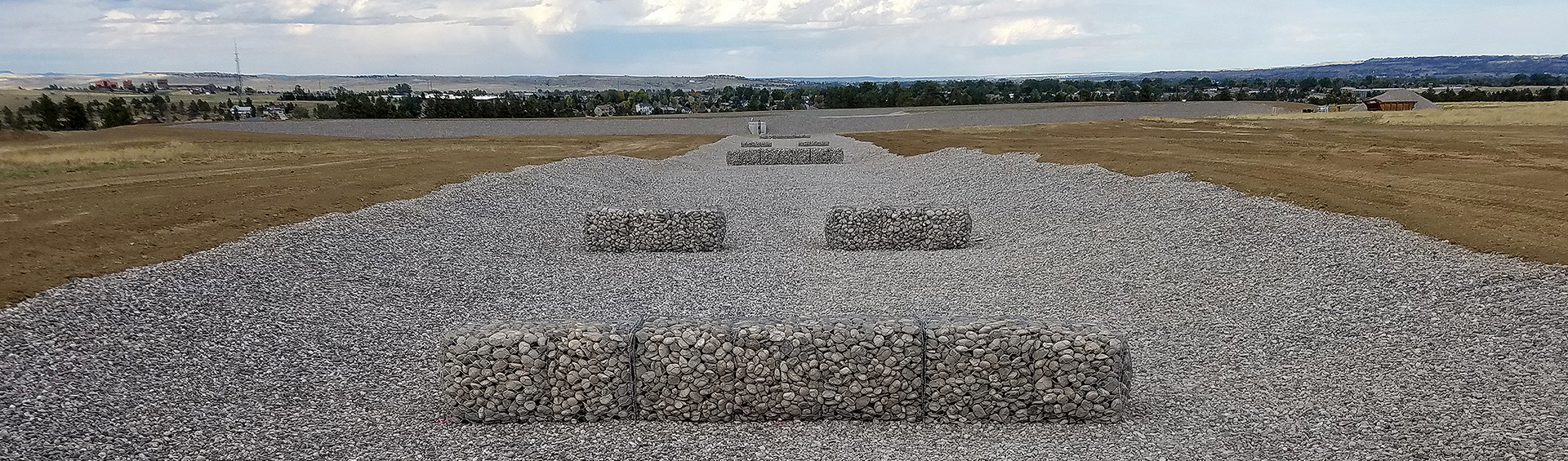
Billings-Logan International Airport needed a solution to control the large stormwater events on the airfield, put the water in a new pond structure, and drain them to a creek.
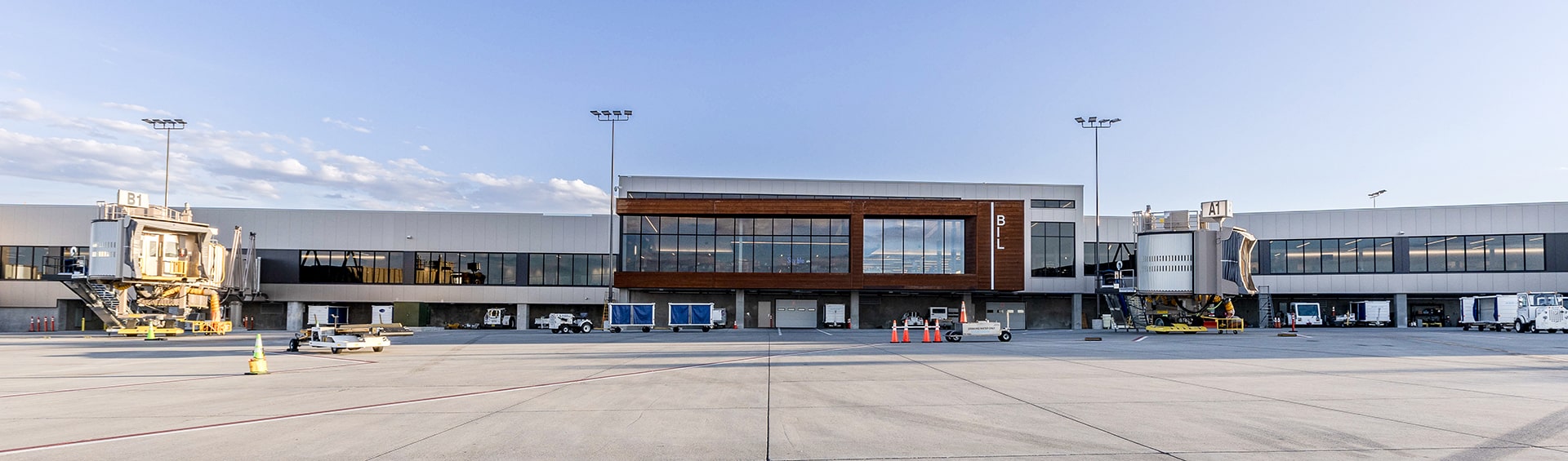
Thirty years after its last remodel, the Billings Logan International Airport hired Morrison-Maierle to help update and expand its terminal building.
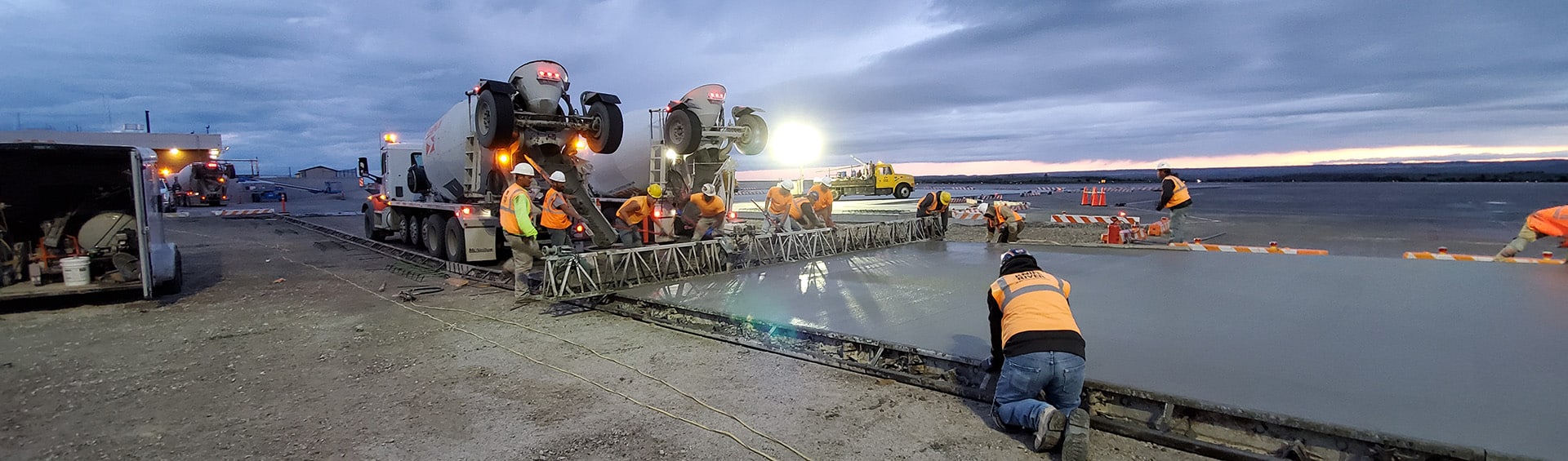
Alkali-Silica Reaction (ASR) is a chemical reaction in concrete that causes it to explode. ASR had not been seen in Montana until Morrison-Maierle discovered it at the Billings airport.

We know that building great communities starts with teams made up of great people. If you’re exploring ways to collaborate and make an impact, join us.
Explore Career Opportunities