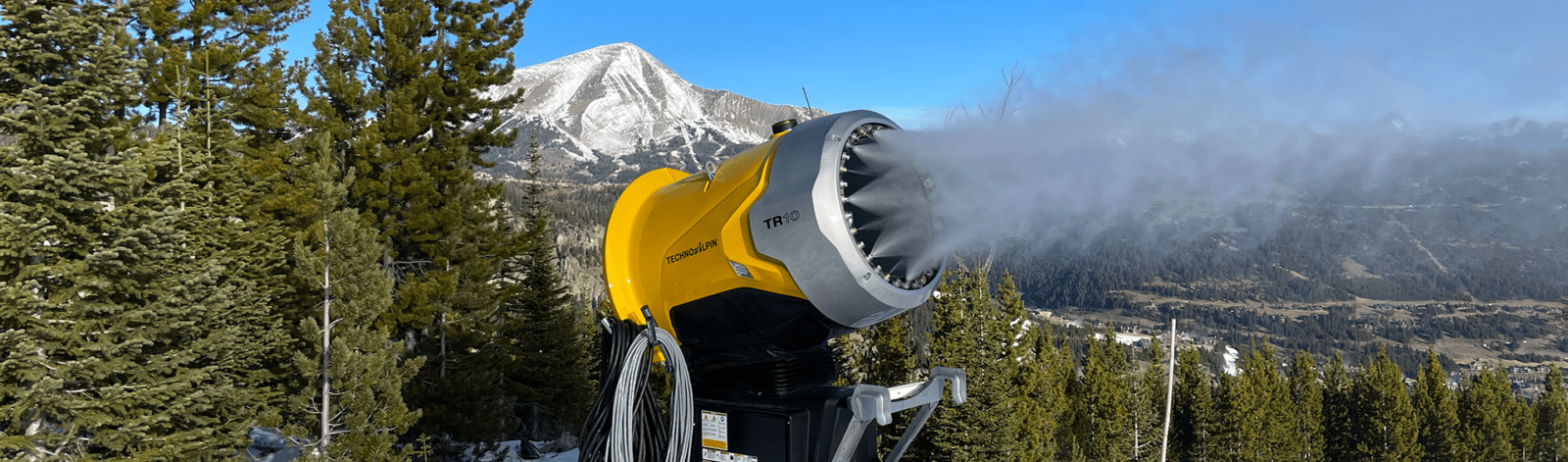
How Ski Resorts Are Using Reclaimed Water to Make Snow
Tapping into reclaimed water brings snow to the slopes while also creating other downstream benefits
Across the West, two long-standing challenges are converging: ski resorts need reliable early-season snow, and many mountain communities are managing more treated wastewater than ever before. In recent years, a growing number of ski areas, water reclamation facilities, and communities have been exploring an innovative link between the two. By using highly treated reclaimed water for snowmaking, communities can reduce their storage burdens. At the same time, resorts gain a reliable water source for snowmaking, creating a solution that benefits everyone downstream.
This approach is still emerging, but it’s already proving its value in a handful of states and resorts in Canada and the Yellowstone Club in Montana. With new state policies and growing interest from ski areas, reclaimed-water snowmaking is becoming an increasingly viable tool for communities facing cold winters, changing snowfall patterns, and limited effluent disposal options. The typical year-to-year variability of snowpack strains recreational economies and places additional stress on freshwater sources.
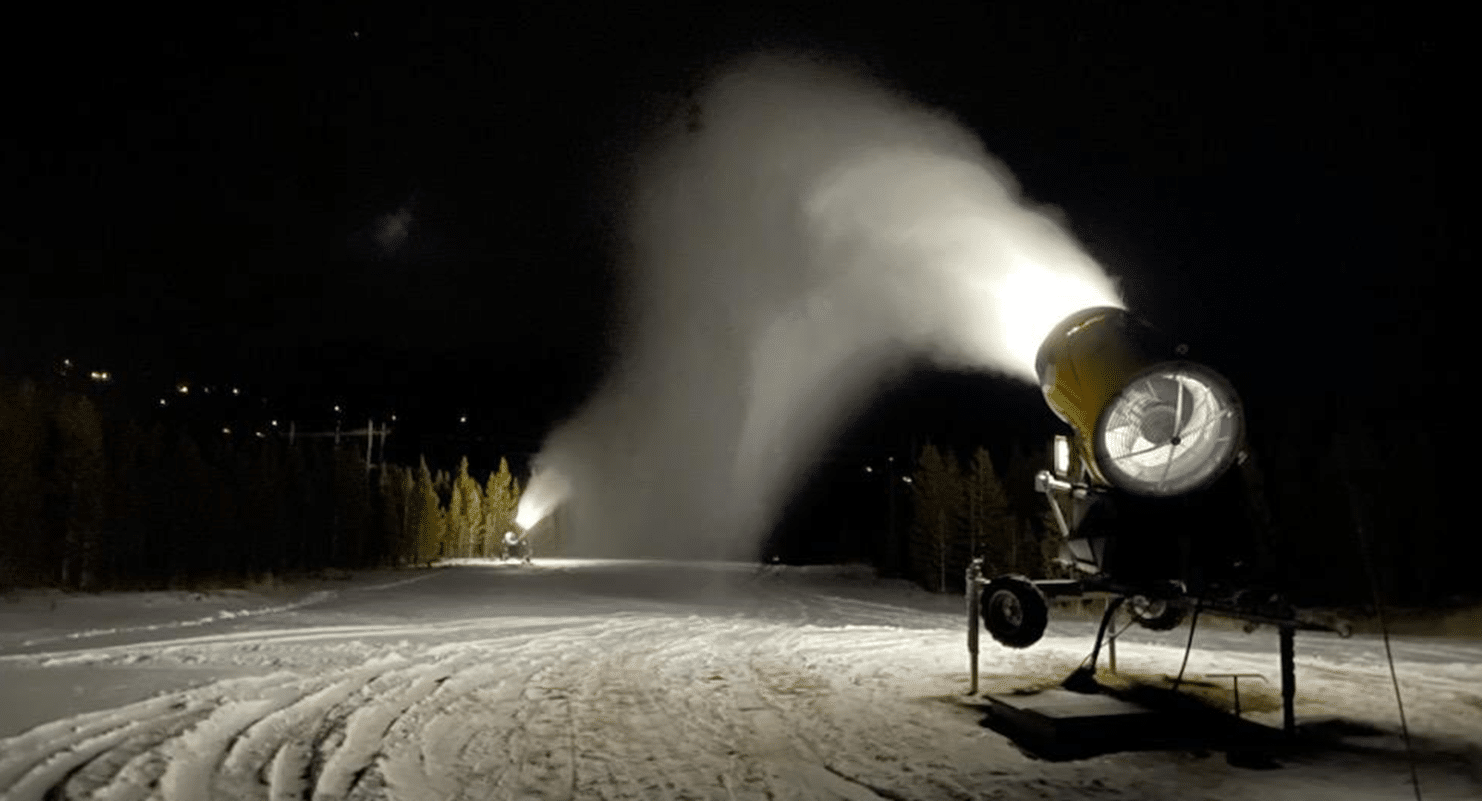
Reclaimed-Water Snowmaking 101
Reclaimed water begins its life in the same place as all community wastewater—in residential and commercial collection systems. From there, it enters a wastewater treatment plant, where it undergoes a series of advanced treatment steps, including denitrification, phosphorus removal, filtration, pH balancing, and disinfection. In Montana, reclaimed water used for snowmaking undergoes the highest level of treatment classified by the Montana Department of Environmental Quality (DEQ) as Class A-1.
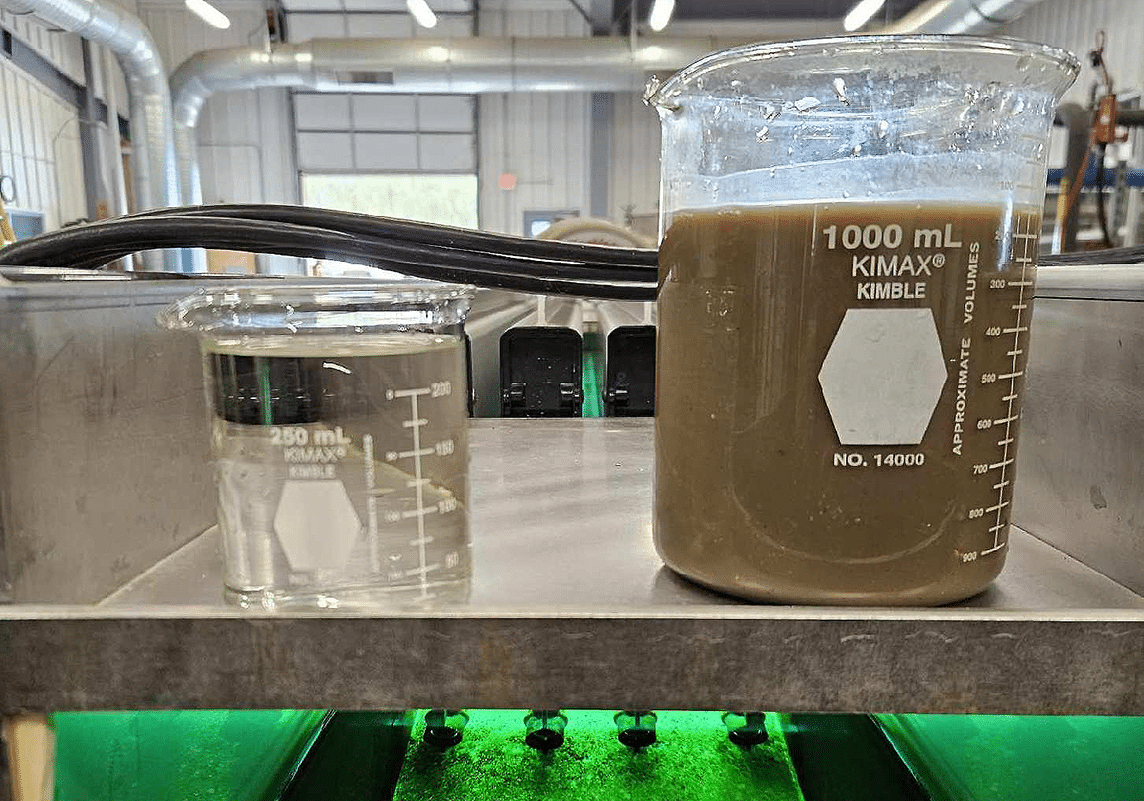
While this water is not considered potable, it is remarkably clean. In fact, if you placed a glass of bottled water next to a glass of treated A-1 effluent, most people wouldn’t be able to tell the difference visually.
Seasonal irrigation has long been the most common use for reclaimed water, but it’s far from the only option. When reclaimed water is treated to Class A-1, it opens the door to reuse options. The Montana DEQ –2 Circular, Appendix B covers Water Reclamation and Reuse. Appendix B lists the allowable uses of reclaimed water and the classifications that water needs to meet to qualify for the particular use case.
When water is treated to Class A-1, it can be used for:
- Landscape irrigation without agronomic uptake rate limitations.
- Animal and fish operations.
- Fire fighting and fire protection systems.
- Aquifer recharge.
- Stream flow augmentation.
- Snowmaking.
- Other approved uses.
What Role Can Ski Resorts Play in This Process?
Snowmaking requires significant volumes of water, particularly in early winter when resorts need to build a dependable base before natural snowfall accumulates. Traditionally, that water comes from municipal wells, local aquifers, or dedicated surface-water sources. But as communities grow, those supplies face increasing pressure, and every gallon dedicated to recreation is one less gallon available for residents and businesses.
Reclaimed water offers a resilient alternative. It helps communities manage excess treated effluent—especially in areas that cannot discharge it to nearby waterways—and provides ski resorts with a steady, predictable source of snowmaking water during the most critical part of their season.
Placing water in the upper watershed as compacted snow also has significant ecological impacts. The basal layer of snow produced and compacted in the early season helps keep early-season snowfall from melting too quickly when the ground isn’t frozen yet. This maximizes the natural snowfall and prolongs the seasonal snowpack, benefiting the entire watershed. Placing this water high in the watershed means that, once the snowpack begins to melt and infiltrate into the soils and streams, it can replenish the aquifer and help sustain stream flows later in the year.
View an example of a reclaimed-water snowmaking project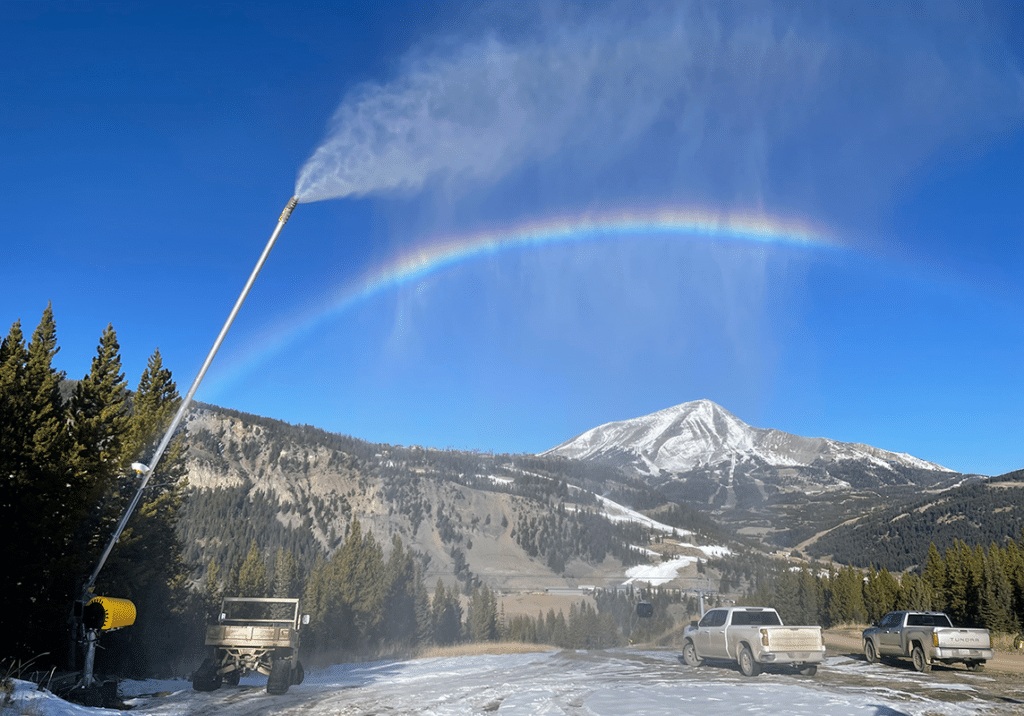
Could this Work for You?
If you manage a ski area, a water reclamation facility, or a mountain community with winter storage challenges, reclaimed-water snowmaking may be worth a closer look. Our water and wastewater specialists have helped resorts and municipalities evaluate feasibility, navigate permitting, and design systems that balance recreation and environmental needs.
Whether you’re hoping to build a more reliable snow base, reduce effluent storage requirements, or explore what’s possible, we’re happy to talk through your options.
A Seasonal Win-Win for Mountain Towns
In mountain towns, wastewater treatment doesn’t pause for winter. Facilities serving zero-discharge or limited-discharge communities must store effluent until the following irrigation season. Traditionally, that requires large, lined holding ponds with ongoing maintenance and environmental oversight.
Snowmaking flips that model.
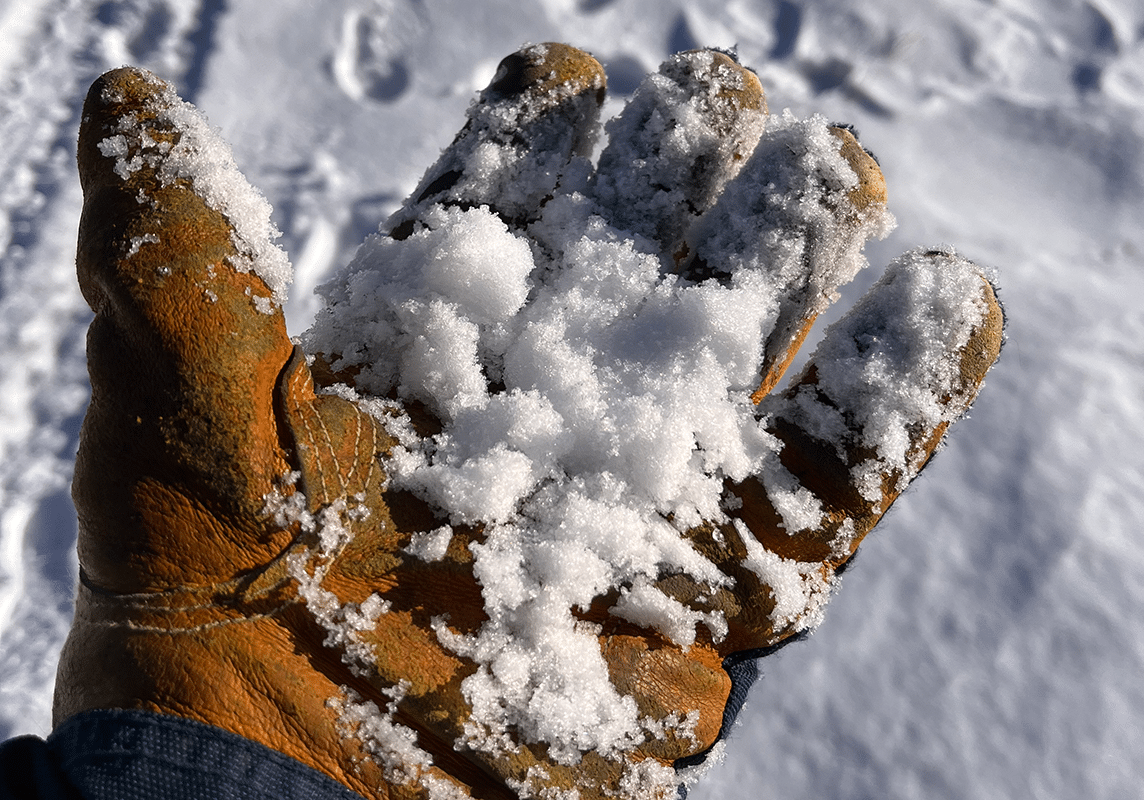
Instead of storing millions of gallons in liquid form, communities can store a portion of their treated water as compact, stable snow on a ski slope. This reduces the need for oversized storage ponds and places the water where it naturally belongs, high in the watershed, ready to slowly melt into the landscape during spring.
Resorts benefit as well. Building an initial 18-inch base layer helps natural snow stick to the mountain rather than melting into bare ground. And when the early-season holidays can make or break a resort’s year, having a predictable water source for snowmaking can play a pivotal role in financial stability.
The Science Behind Reclaimed-Water Snowmaking
One additional benefit of reclaimed-water snowmaking is the ancillary treatment that occurs after the water leaves the plant.
High-Pressure Nucleation
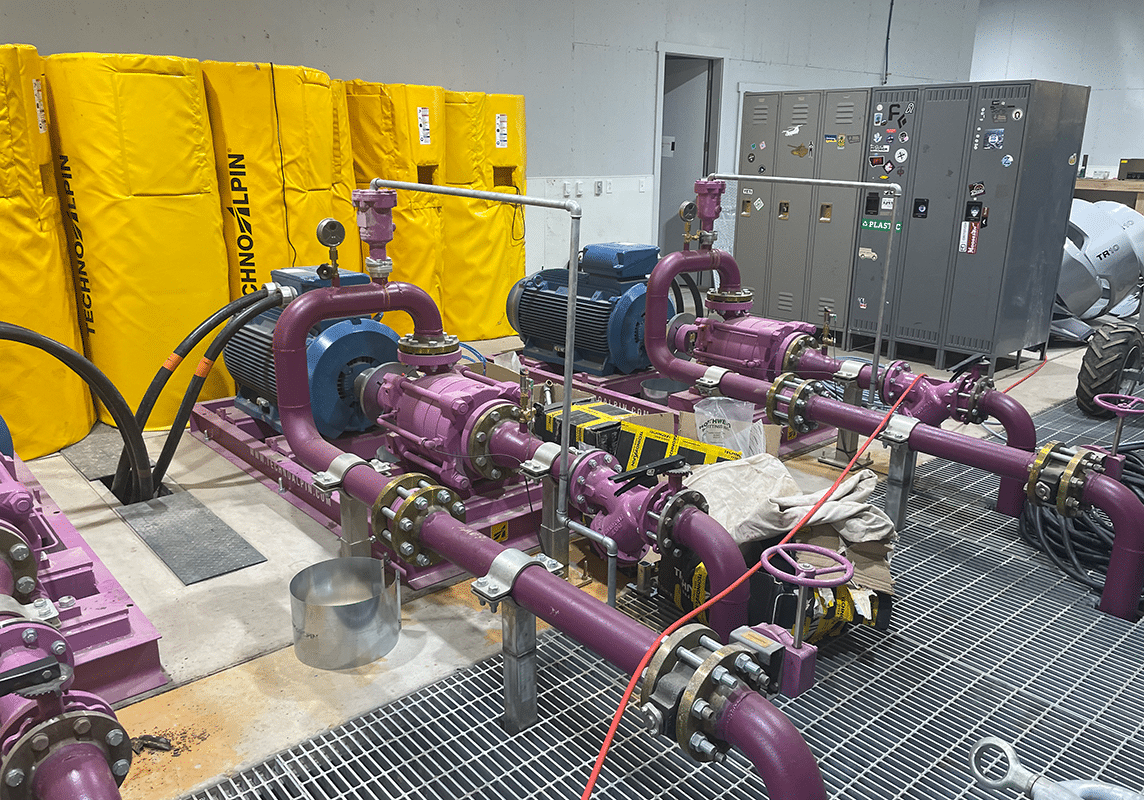
Snowmaking systems atomize water at very high pressures, sometimes reaching 600-700 psi, forcing it through nozzles that create fine droplets. In reclaimed water, this pressurization step enhances the breakdown of ammonia and other residual nutrients, an effect not anticipated in initial regulatory assumptions.
Freeze-Thaw Purification
Once on the ground, the snow undergoes repeated freeze–thaw cycles over the winter months. These cycles drive further removal of ammonia, nitrates, and phosphorus. Routine sampling at several locations—post-plant, at storage ponds, in distribution systems, at the snow guns, and again during spring melt—has shown remarkable reductions. In some reclaimed-water snowmaking systems, ammonia concentrations drop to undetectable levels by spring. Part of this occurs through natural processes: ammonia volatilizes, breaking into nitrogen and hydrogen before dissipating into the atmosphere, where it no longer poses a concern for waterways.
Environmental Buffering
As compacted snow melts gradually, the water infiltrates the ground where grasses, shrubs, and trees further absorb nutrients. The process effectively mimics natural watershed behavior. With more snowpack in the mountains, water is released more slowly and more controlled, adding more cold, clean water to tributaries and the watershed. In years with limited natural snowpack, this supplemental water is more crucial than ever, particularly to the downstream watershed. Higher stream flows and colder temperatures are two factors that combat problematic nuisance algae blooms. Higher stream flows limit sunlight exposure on the streambed, and colder water suppresses the formation of algae blooms, creating a healthier waterway.
What are the Environmental Benefits?
Reclaimed-water snowmaking doesn’t just solve a storage problem—it produces downstream environmental gains.
- Longer-lasting snowpack keeps water in the upper watershed later into the season.
- A more stable streamflow helps protect fish habitat and improve recreational conditions.
- Reduced flood risk comes from avoiding large, rapid runoff events.
- Lower groundwater demands reduce stress on local aquifers for recreational purposes.
Local conservation groups, including the Gallatin River Task Force, have publicly supported these outcomes, noting the extended cool-water benefits for local streams.
Where is Reclaimed-Water Snowmaking Used Now?
Reclaimed-water snowmaking is still in its early stages, but it’s gaining momentum:
- Arizona Snowbowl has used reclaimed water for snowmaking for years.
- The Yellowstone Club in Montana has implemented one of the most advanced systems in the country, storing treated water as snow and providing critical early-season coverage.
- Spanish Peaks Mountain Club and Big Sky Resort are fully permitted for reclaimed-water snowmaking and will begin utilizing reclaimed water for snowmaking in the near future.
Any ski resort with access to high-quality reclaimed water and adequate treatment infrastructure could explore this approach.
Why This Matters for Mountain Communities
The ski industry’s success is closely tied to winter weather, yet natural snowfall has become increasingly variable. Resorts need early-season reliability; communities need responsible effluent management. Snowmaking using reclaimed water offers a way to meet both needs at once.
Instead of drawing from limited drinking-water supplies, ski areas can use a resource communities already have in abundance—treated wastewater. And instead of expanding storage ponds or facing winter disposal limitations, communities can “store” part of their effluent as snow, right where spring runoff begins.
It’s a rare opportunity where environmental stewardship, operational efficiency, and community needs truly align.
Will this solution work for your resort or community?About The Authors

Chip Nielsen is a Senior Water-Wastewater Engineer based in Morrison-Maierle’s Bozeman office, where he plays a key role in wastewater reclamation facility design and construction.
Learn more about Chip
As a senior engineer specializing in water and wastewater solutions, James focuses on water resources for communities and developments.
Learn more about James