Commercial
Three Ways to Beautify a Space with Grilles, Registers, and Diffusers
Design considerations typically focus on flooring, surface finishes, and lighting when creating an aesthetically pleasing room. A critical room design element often overlooked is HVAC grilles, registers, and diffusers—or GRDs. Every room the building’s HVAC system serves will have some form and combination of GRDs. In fact, if done well and with careful selection, GRDs are so commonplace that they typically blend into the background.
However, if the style and shape of the GRDs are not carefully considered, they can stick out like a sore thumb and be a blemish in an otherwise perfect room. Here are three ways to hide or incorporate GRDs in your room design.
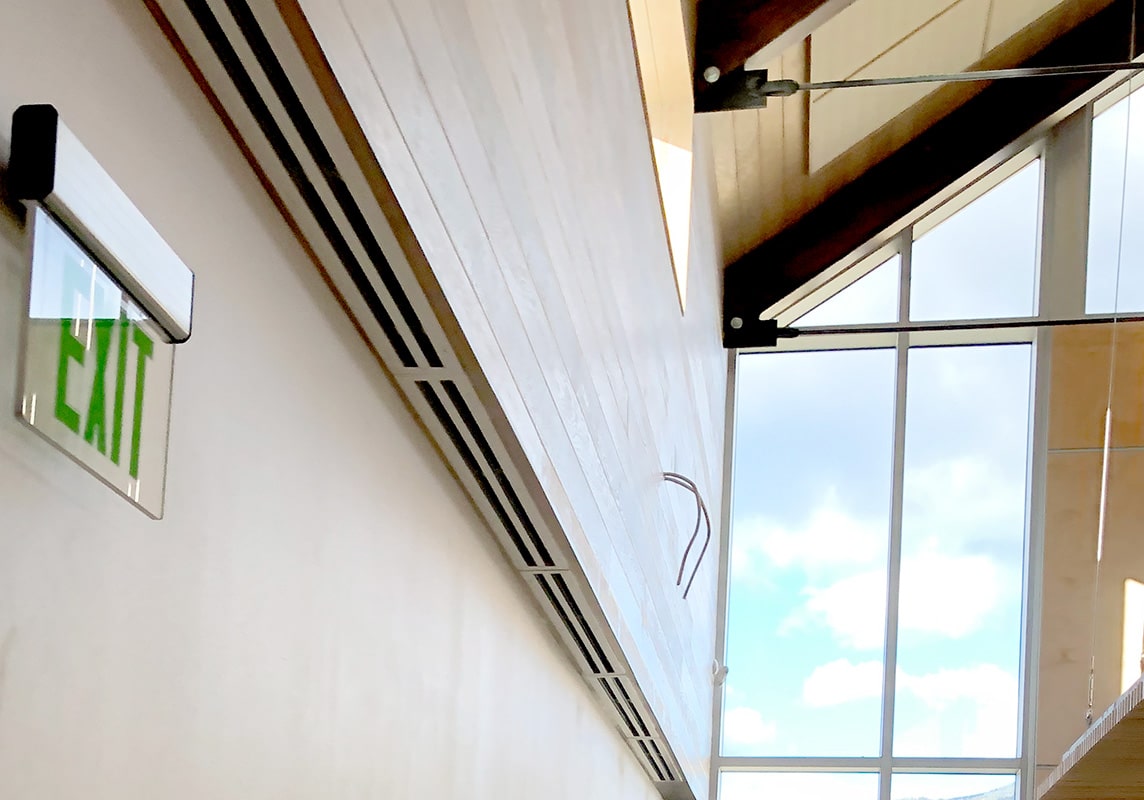
A return grille is designed into the soffits at Ravalli Electric Co-Op facility near Victor, Montana.
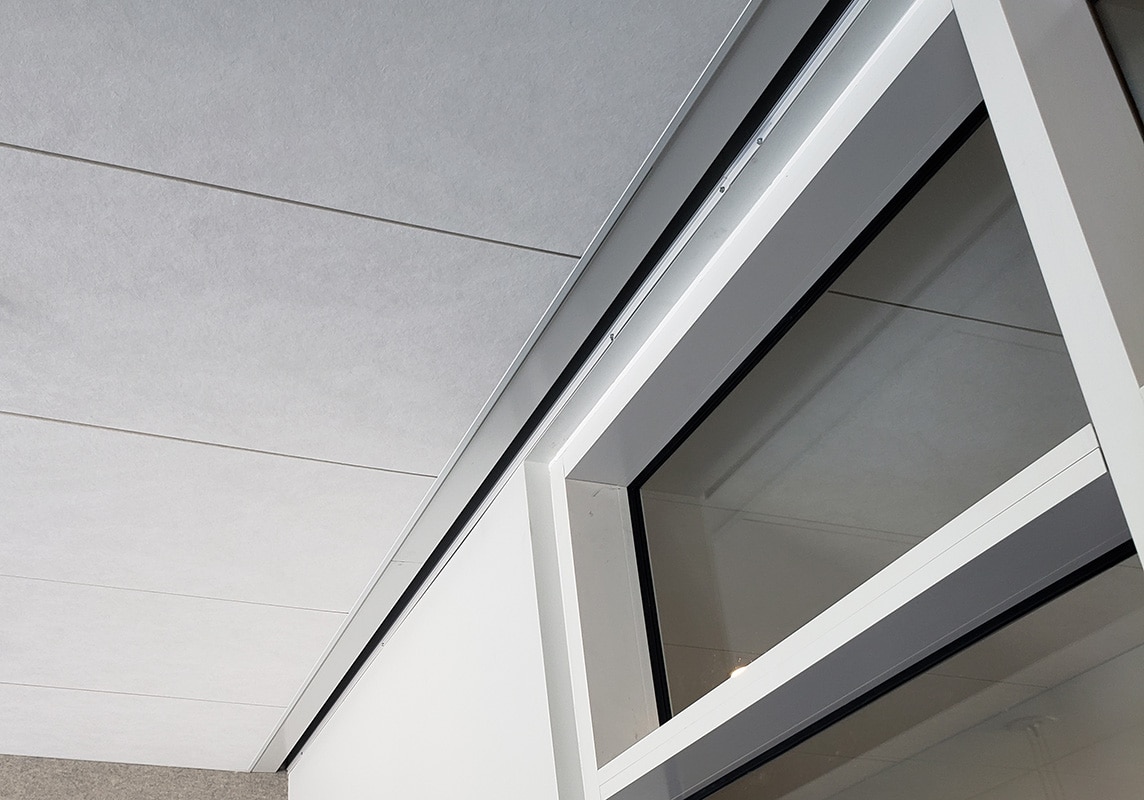
This image shows an example of a ceiling reveal for return air at the new Missoula Public Library.
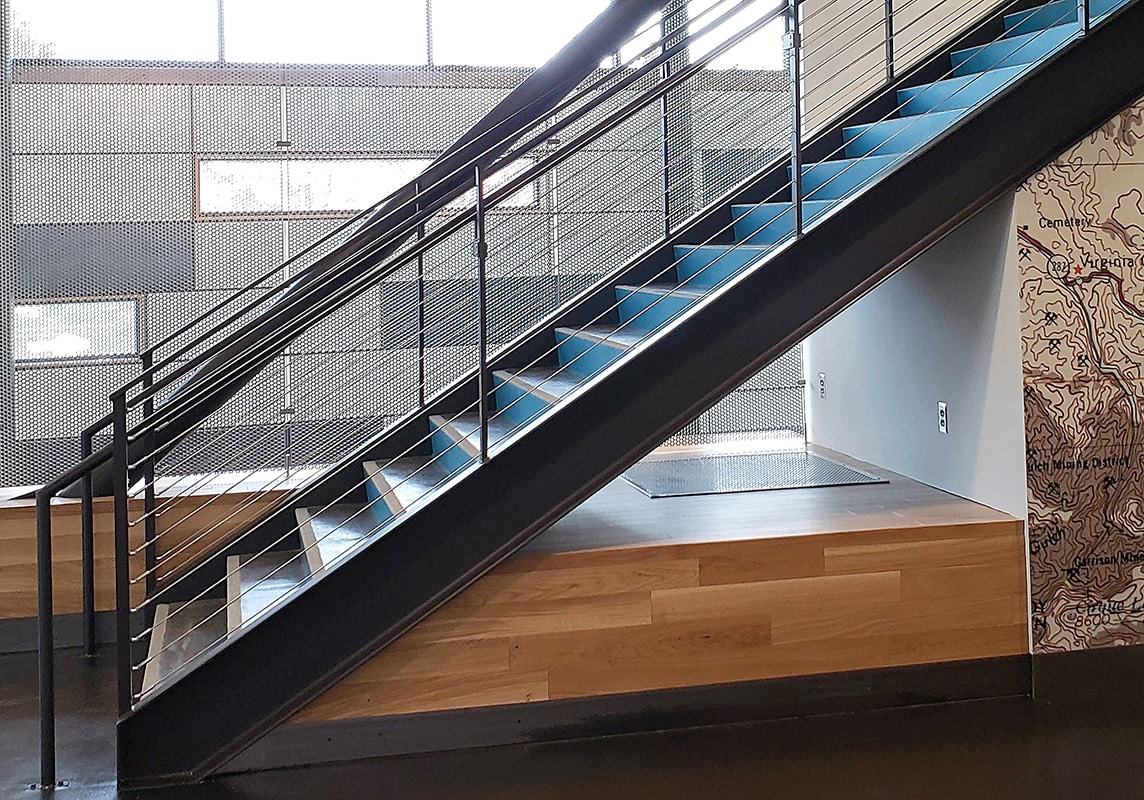
In this image, a return grille has been designed to fit underneath a stairwell at the MSU Rendezvous Dining Hall.
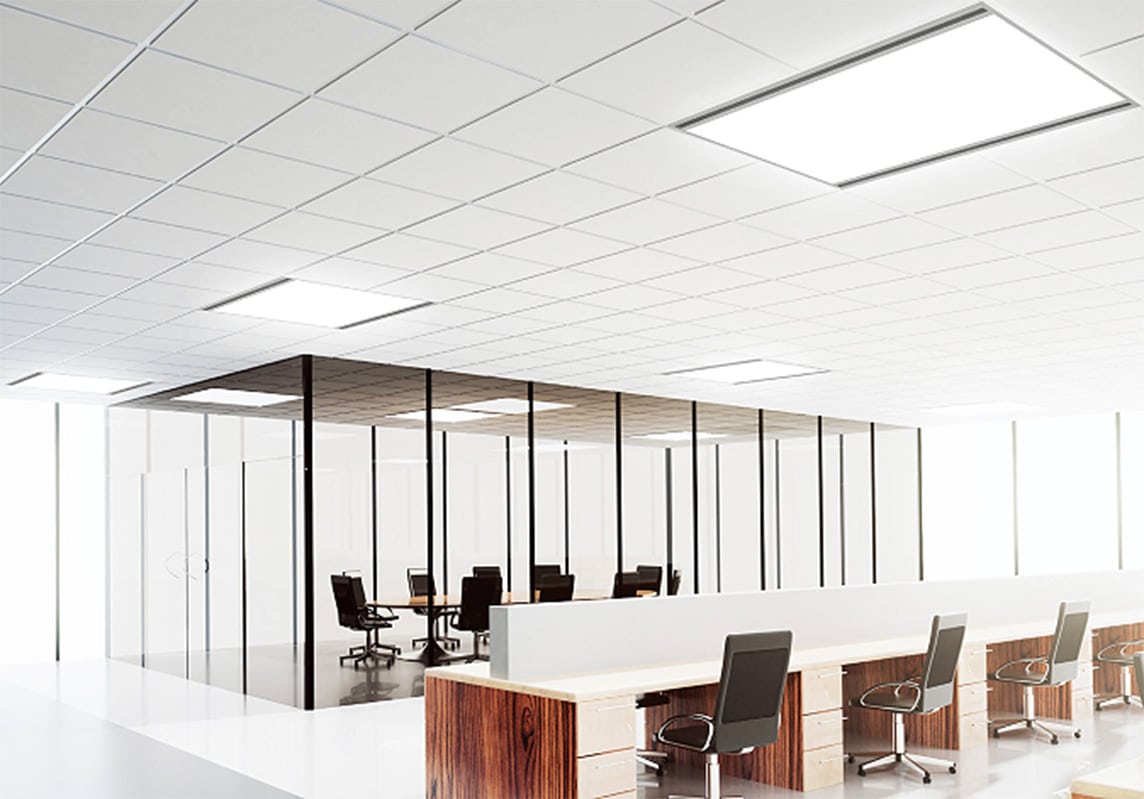
This image shows an example of Light Troffer Diffusers. Photo courtesy of Price Industries.
Reveals Can Be a Designer’s Best Friend
Hide return grilles by creating reveals within soffits for the return grilles to recess into. Typically, these reveals are open to a plenum; however, less common ducted configurations are also possible. The grille is hidden from view unless you’re standing beneath the reveal.
Another option is to create a reveal at the edge of a ceiling and leave the gap open to the ceiling plenum. This eliminates the need for a return grille and instead allows the return air to flow around the ceiling edge rather than through a traditional GRD.
It is important to properly size reveal openings to avoid noise issues. If the opening is too small, the air as it flows through the reveal may create a whistling noise, or it may reduce airflow, which could cause downstream issues with the HVAC system. Size reveals openings like this, such that the air velocity through the opening is 400 feet per minute.
Ways to Blend GRDs Into Building Elements
Building elements that create natural dead space are another great way to seamlessly blend GRDs into a room’s design. For example, lobby spaces with exposed staircases often do not utilize the space beneath the staircase, which makes it a perfect spot for floor or wall return grilles. There are also an emerging number of products today that integrate GRDs into other building elements, such as ceiling fans or lighting. Light troffer diffusers, for example, are linear slot diffusers designed to attach to light fixtures to provide a seamless look.
Learn more about our mechanical engineering services
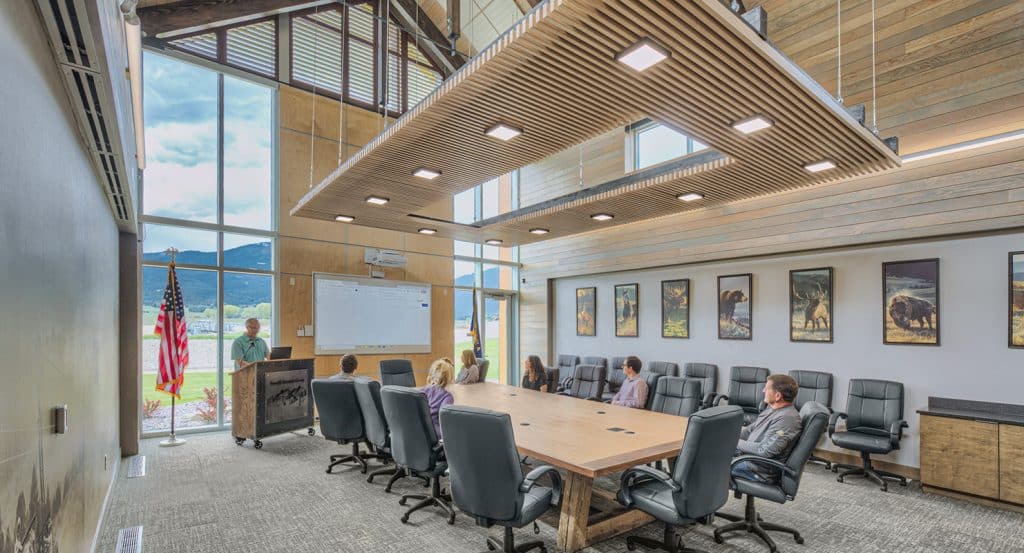
The Ravalli Electric Co-Op's conference room.
Project Example
On our project for the Ravalli Electric Co-Op, our mechanical design extended aesthetics to its selection and use of HVAC grilles, registers, and diffusers. A good example is the return air grilles at the REC facility. To provide a cleaner look, the mechanical and structural team worked together to hide these within soffits, making them unnoticeable unless you stand beneath the reveals.
A Word to the Wise
Taking an unconventional approach to airflow distribution requires special attention during the system’s design. Despite nice aesthetics, occupants will be unhappy in an uncomfortable room. A well-thought-out design ensures that room air is thoroughly mixed, that glazing is adequately air-washed, that stratification is mitigated, and that any noises associated with the system are acceptably quiet. With all these parameters to consider, finding the right solution can be challenging. Collaboration between disciplines is key to finding a successful solution.
You don’t have to settle when selecting the right grille, register, or diffuser for a room, and your design doesn’t have to be boring! With some creative thinking and astute engineering, it’s possible to develop new airflow distribution solutions that enhance a room’s aesthetics while keeping its occupants comfortable.
Related Insights

Meet the Team